Digital Transformation
10 Best AI Recruiting Tools in 2026 (Tested): Screening, Matching, and Vetted Hiring
Pick the right AI hiring tool by fixing your slowest hiring bottleneck—compare screening, sourcing, matching, pricing, and best fits.
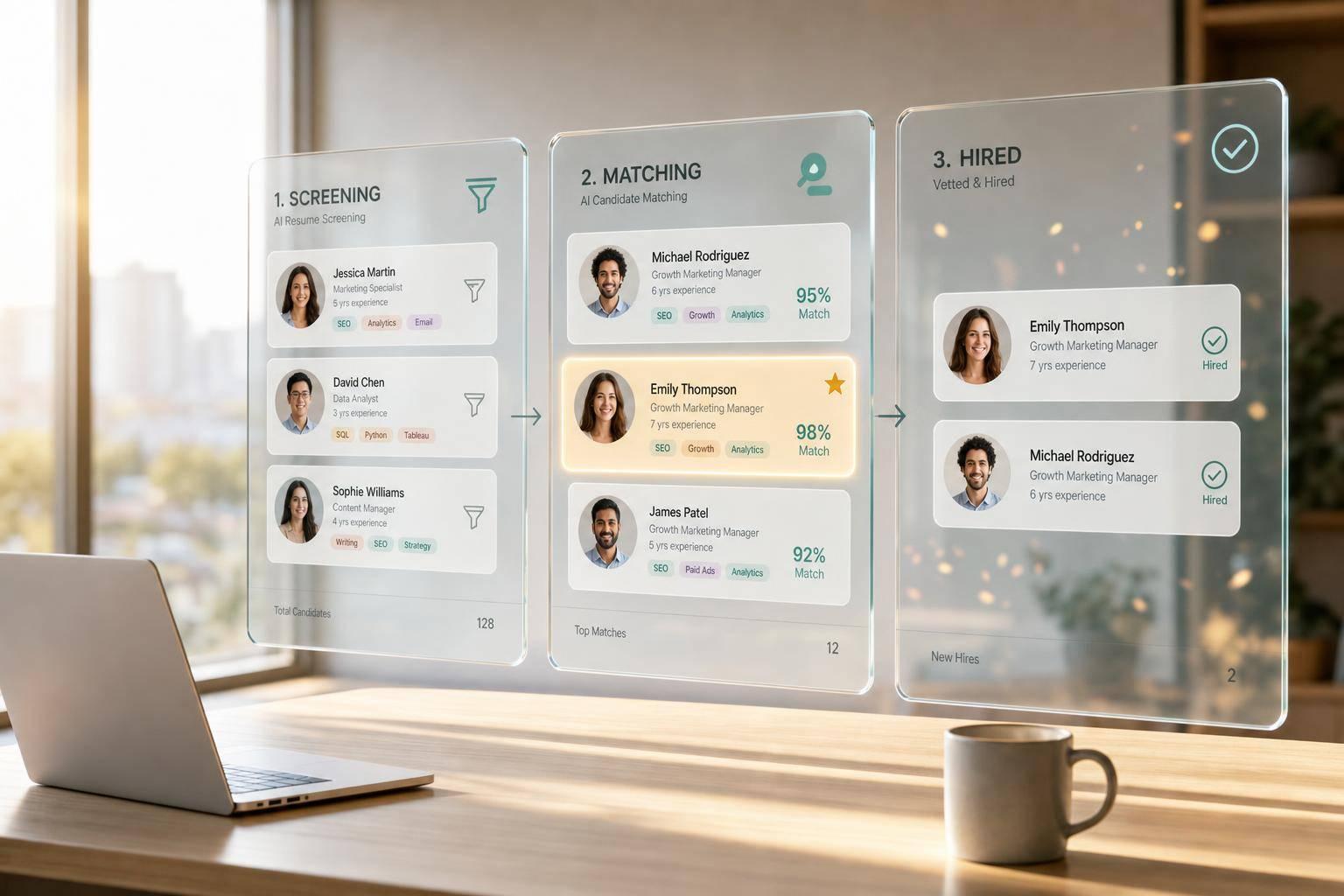
10 Best AI Recruiting Tools in 2026 (Tested): Screening, Matching, and Vetted Hiring
Need the short answer? If you want vetted remote talent, I’d put FindTalent.PH first. For frontline volume hiring, I’d look at Paradox. For large companies that want skills-based hiring and internal mobility in one system, Eightfold AI is the top fit.
I tested this list through one simple lens: which tool fixes which hiring bottleneck. Some tools help you source people. Some rank applicants. Some automate interviews and scheduling. Others act more like an ATS with AI layered in.
Here’s the full list covered in this guide:
- FindTalent.PH
- HireVue
- Eightfold AI
- Paradox
- hireEZ
- SmartRecruiters
- Greenhouse
- Workable
- Gem
- Zoho Recruit
What stood out fast:
- FindTalent.PH focuses on pre-vetted Filipino specialists
- HireVue focuses on video screening and structured assessments
- Eightfold AI focuses on enterprise skills matching and internal hiring
- Paradox focuses on chat-based screening and scheduling for high-volume roles
- hireEZ focuses on outbound sourcing and ATS rediscovery
- SmartRecruiters focuses on full recruiting workflow for large teams
- Greenhouse focuses on structured hiring and scorecards
- Workable focuses on all-in-one hiring for SMBs
- Gem adds AI review and sourcing on top of your ATS
- Zoho Recruit focuses on lower-cost workflow automation for SMBs
A few numbers matter here. The article notes that 82% of CHROs plan to adopt AI agents within the next year. It also shows a sharp split on pricing: Workable starts at $149/month, Zoho Recruit starts around $25/user/month, while enterprise tools like Eightfold AI can run $150,000 to $500,000+ per year.
I Tested 5 AI Recruiting Tools So You Don't Have To (Most Are Lying)
sbb-itb-212c9ea
Quick Comparison
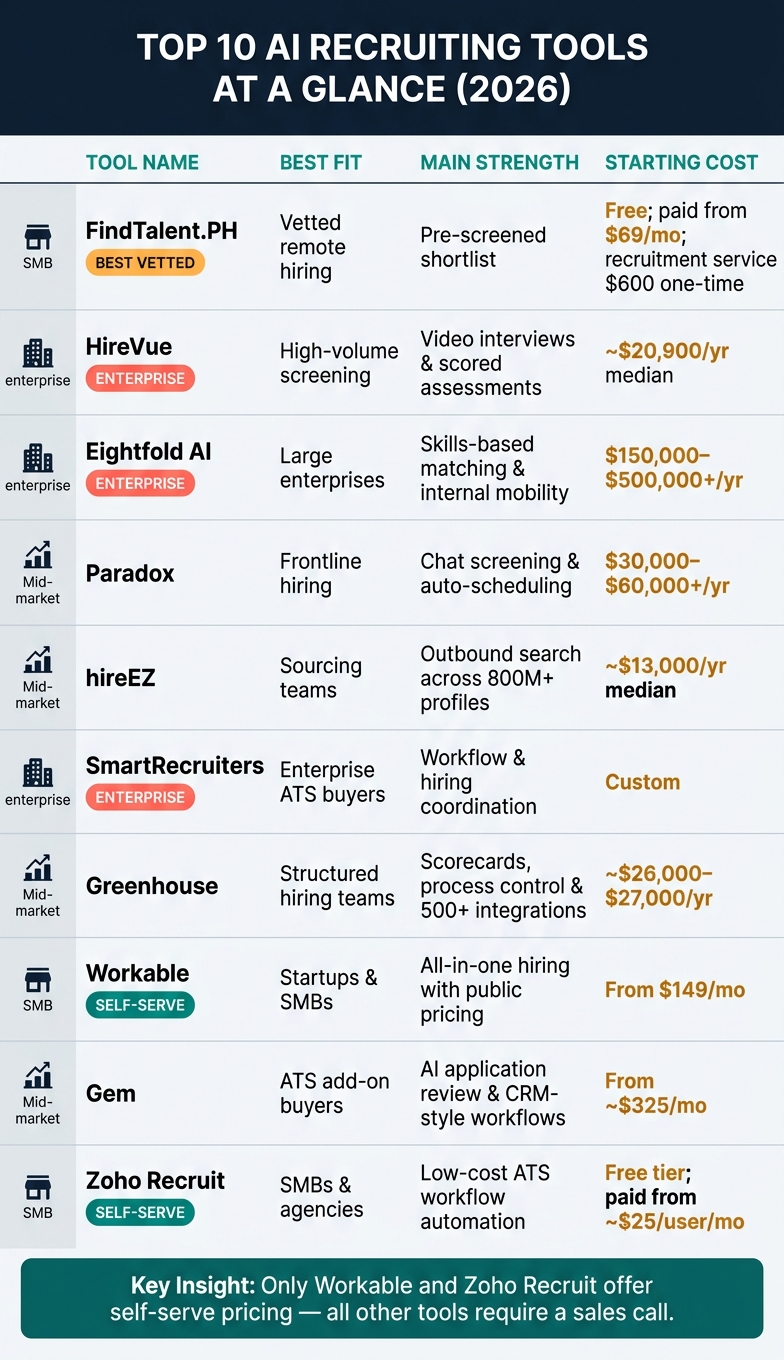
Top 10 AI Recruiting Tools Compared: Pricing, Best Fit & Key Strengths (2026)
| Tool | Best Fit | Main Strength | Starting Cost / Pricing |
|---|---|---|---|
| FindTalent.PH | Vetted remote hiring | Pre-screened shortlist | Free; paid plans from $69/month; recruitment service $600 one-time |
| HireVue | High-volume screening | Video interviews and scored assessments | Custom; median around $20,900/year |
| Eightfold AI | Large enterprises | Skills-based matching and internal mobility | Custom; often $150,000 to $500,000+/year |
| Paradox | Frontline hiring | Chat screening and auto-scheduling | Custom; often $30,000 to $60,000+/year |
| hireEZ | Sourcing teams | Outbound search across large profile databases | Custom; median around $13,000/year |
| SmartRecruiters | Enterprise ATS buyers | Workflow and hiring coordination | Custom |
| Greenhouse | Structured hiring teams | Scorecards, process control, and partner apps | Quote-based; median around $26,000 to $27,000/year |
| Workable | Startups and SMBs | All-in-one hiring with public pricing | From $149/month |
| Gem | ATS add-on buyers | AI application review and CRM-style workflows | From about $325/month |
| Zoho Recruit | SMBs and agencies | Low-cost ATS workflow automation | Free tier; paid plans from about $25/user/month |
If I had to boil the article down to one line, it would be this: pick the tool based on the slowest part of your hiring process, not the biggest feature list.
1. FindTalent.PH
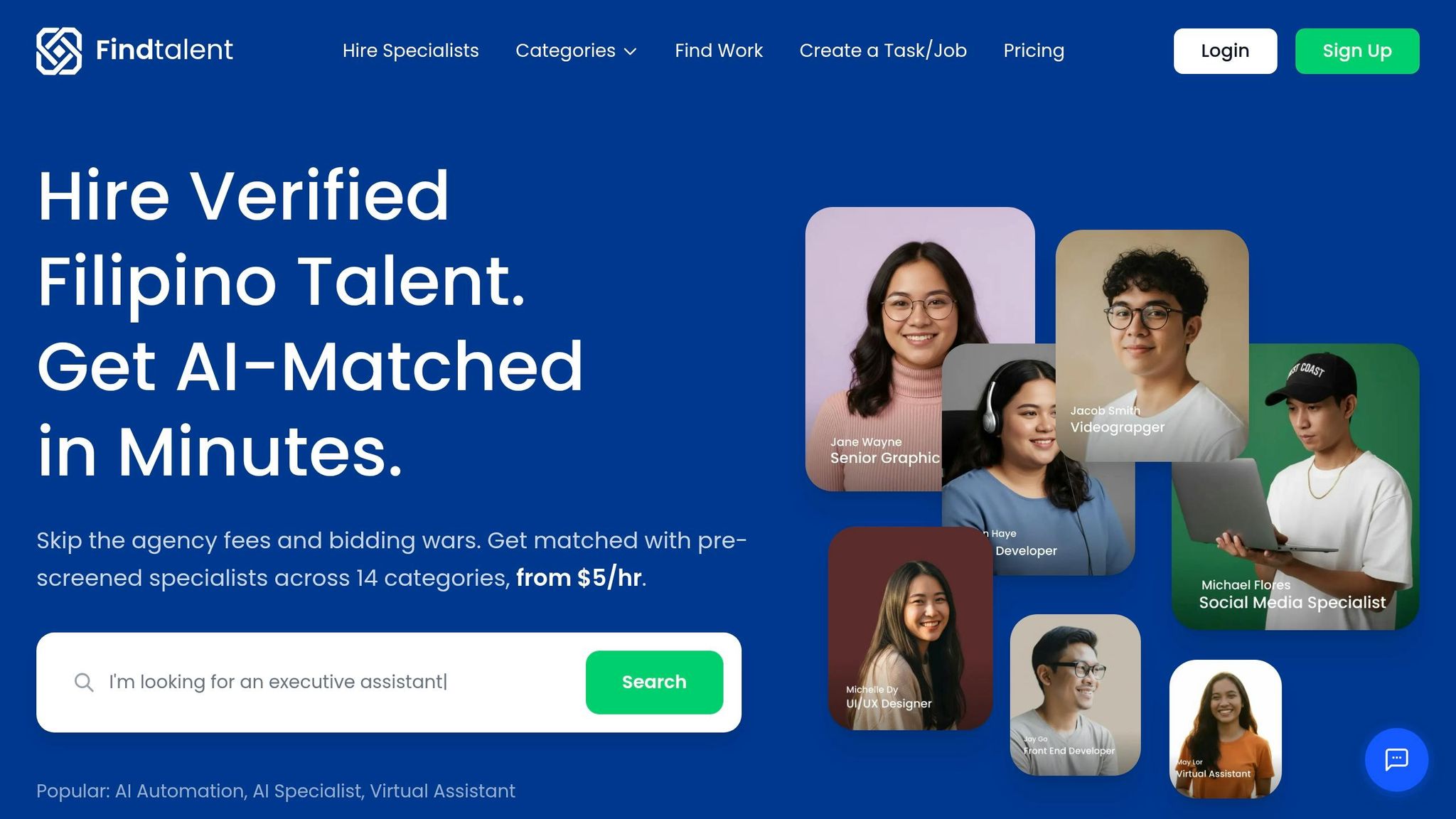
FindTalent.PH is a vetted remote hiring marketplace for Filipino specialists. It mixes AI matching with recruiter screening. The platform includes 130+ verified roles across 14 categories, such as Web & Tech, AI & Automation, Digital Marketing, and Virtual Assistance.
What sets it apart is simple: matching happens after vetting, not before.
Each specialist is identity-verified, skills-tested, and portfolio-reviewed before showing up to employers. Recruiters also check English proficiency, work history, and technical ability. Employers can review voice introductions and identity-verified badges on each profile. If you want managed hiring, the Recruitment Service costs a $600 one-time fee and delivers 1–3 vetted candidates within 5–7 business days. That service includes sourcing, screening, and interviewing through a dedicated team, plus a replacement guarantee at no extra cost.
That means the shortlist is usually cleaner and easier to work through.
You can paste in a plain-language job description - even a one-paragraph brief - and get a ranked shortlist with talent match scores in seconds. The Free plan lets employers see match scores before paying for an upgrade.
Built-in messaging and scheduling tools keep the hiring process inside the platform, from shortlist to interview. FindTalent.PH also stores hiring history and candidate profiles, which helps when reposting similar roles or managing applications from one dashboard. In practice, it works a lot like an ATS.
| Plan | Monthly Cost | Job Posts | Specialist Contact |
|---|---|---|---|
| Free | $0 | 1 | Browse only |
| Plus | $69 | 5 | 50 specialists/mo |
| Pro | $99 | 10 | Unlimited |
| Recruitment Service | $600 (one-time) | - | 1–3 vetted candidates delivered |
Specialists usually charge $5–$15/hour and are paid directly, with no agency markups or per-hire commissions. Agencies that use the platform can save up to 80% on payroll compared with local hiring.
Next, the comparison shifts from vetted sourcing to interview automation.
2. HireVue
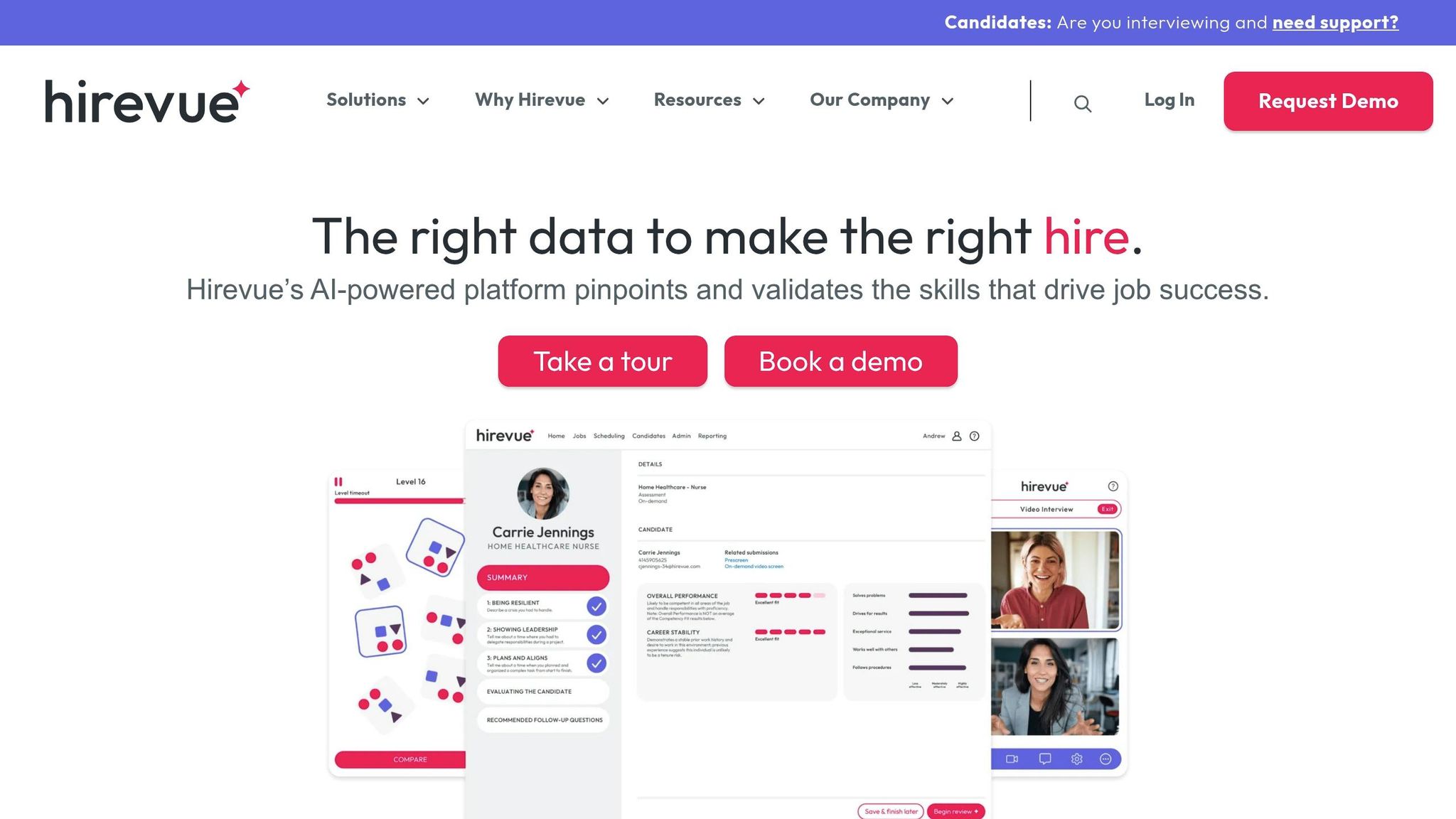
For teams that need a faster first screening pass, HireVue automates the interview stage and scores responses at scale. It’s built for high-volume hiring. Candidates record asynchronous video responses on their own time, usually in under 20 minutes, and recruiters can review scored results later when it works for them.
Screening Quality
HireVue scores recorded answers using text-based competency signals, not facial analysis. It reviews the text from recorded responses and looks for word-choice patterns and signals tied to job skills. Facial expression analysis ended in 2021, so scoring now relies on text only. Structured rubrics and standardized questions also help cut down on interviewer-to-interviewer differences across large applicant pools.
Each finished assessment includes an Overall Potential Score and a competency-by-competency breakdown, which helps recruiters sort the shortlist fast. The built-in Fairness Impact Dashboard tracks pass rates across demographic groups in real time, helping teams spot adverse impact and support EEOC compliance.
After screening, the platform moves into job-fit testing with simulations and role-specific assessments.
Matching Accuracy
HireVue works especially well for campus recruiting and frontline roles in areas like retail, logistics, healthcare, and financial services. The platform includes Virtual Job Tryouts, which simulate actual job tasks, along with AI-scored coding challenges for technical roles.
Workflow Automation and ATS Compatibility
HireVue connects with more than 30 ATS and HCM platforms, including Workday, SAP SuccessFactors, Oracle, iCIMS, and Greenhouse. It supports bi-directional syncing for candidate scores and status updates. There’s also an AI scheduling assistant that handles interview coordination automatically. For enterprise teams, rollouts usually take 8–12 weeks.
Pricing is quote-based. Buyer-reported median annual spend is $20,900, with a range from $9,794 to $41,056 depending on hiring volume and the modules included. That price point makes HireVue a stronger fit for enterprise teams than for most small and midsize businesses.
3. Eightfold AI
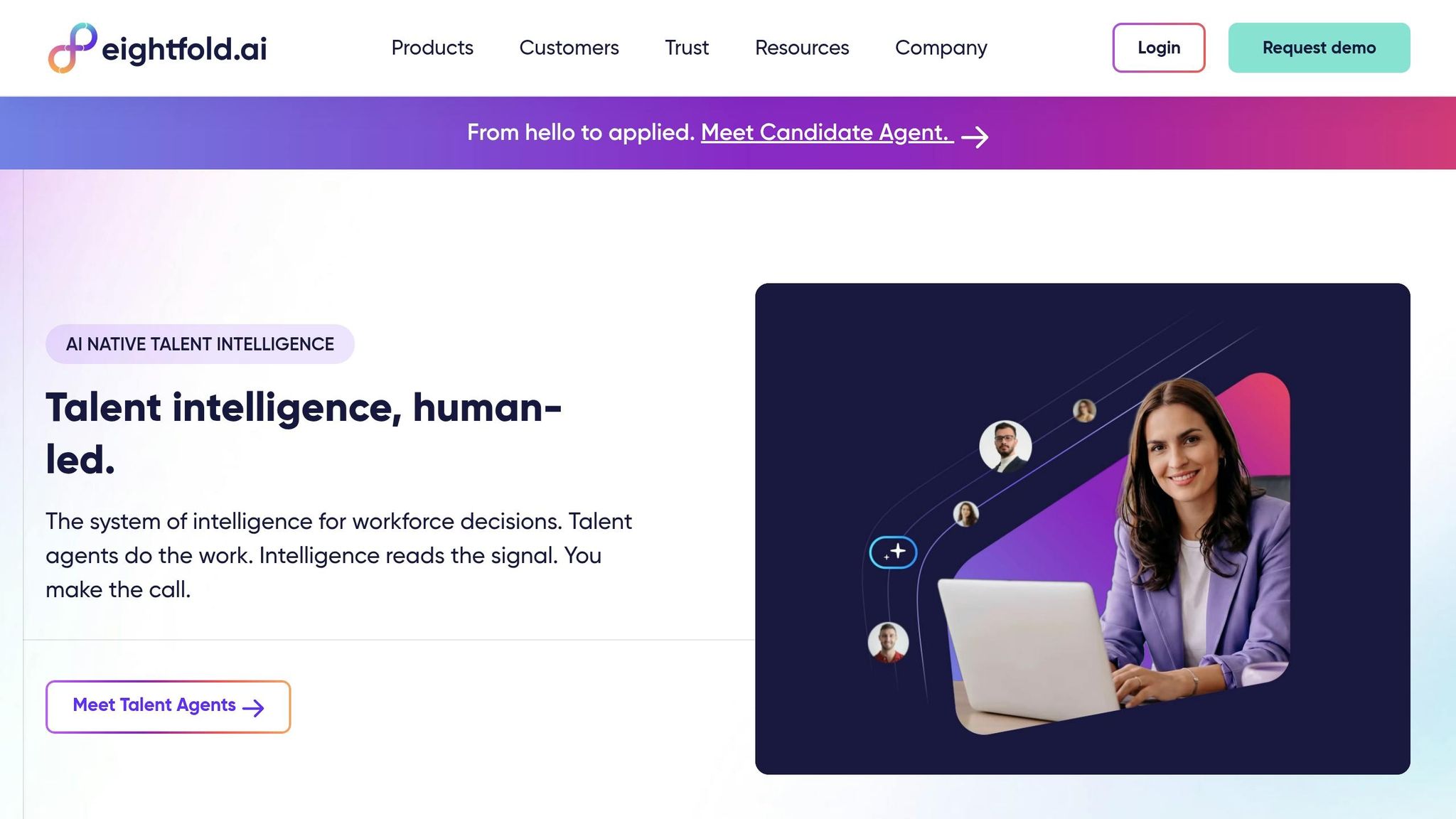
Eightfold is the enterprise pick for skills-based screening and internal mobility. It’s built for large companies that want to move past simple keyword resume screening. Instead, it uses skills-based matching AI trained on more than 1.6 billion career profiles to look at work history patterns, career path signals, and how someone’s skills have grown over time.
Screening Quality
Eightfold can hide names and other personal details during screening, which helps recruiters focus on skills and potential instead of personal identifiers. It also brings internal employees into view for open roles before external sourcing begins, so internal mobility sits at the center of the hiring flow.
Matching Accuracy
The platform’s related-skill matching is where it stands out most. Eightfold explains it this way:
"Someone flagged as a good match for a role may have never done that exact role before. But, they have the potential based on their adjacent skills."
That idea has led to measured gains. After rolling out the platform, Vodafone reported a 50% drop in cost-to-hire. BeamJobs reported a 42% jump in candidate pipeline volume and 26% faster fills.
Workflow Automation and ATS Compatibility
Eightfold automates candidate discovery and re-engages "silver medalists" already stored in the ATS. It can also automate steps like moving high-match candidates to interviews, and it integrates with major ATS and HCM systems.
There are a couple of trade-offs. Some users report Workday sync issues. Setup usually takes 60 to 90 days before the models become dependable for a given company.
Eightfold is enterprise-only and quote-based, with no public rate card. Industry estimates put large deployments at about $150,000 to $500,000+ per year, or around $7 to $10 per employee per month. It fits best at large enterprises, usually those with 2,000+ to 5,000+ employees, that are serious about skills-based hiring.
Next, Paradox shifts the focus from skills matching to high-volume hiring and scheduling.
4. Paradox
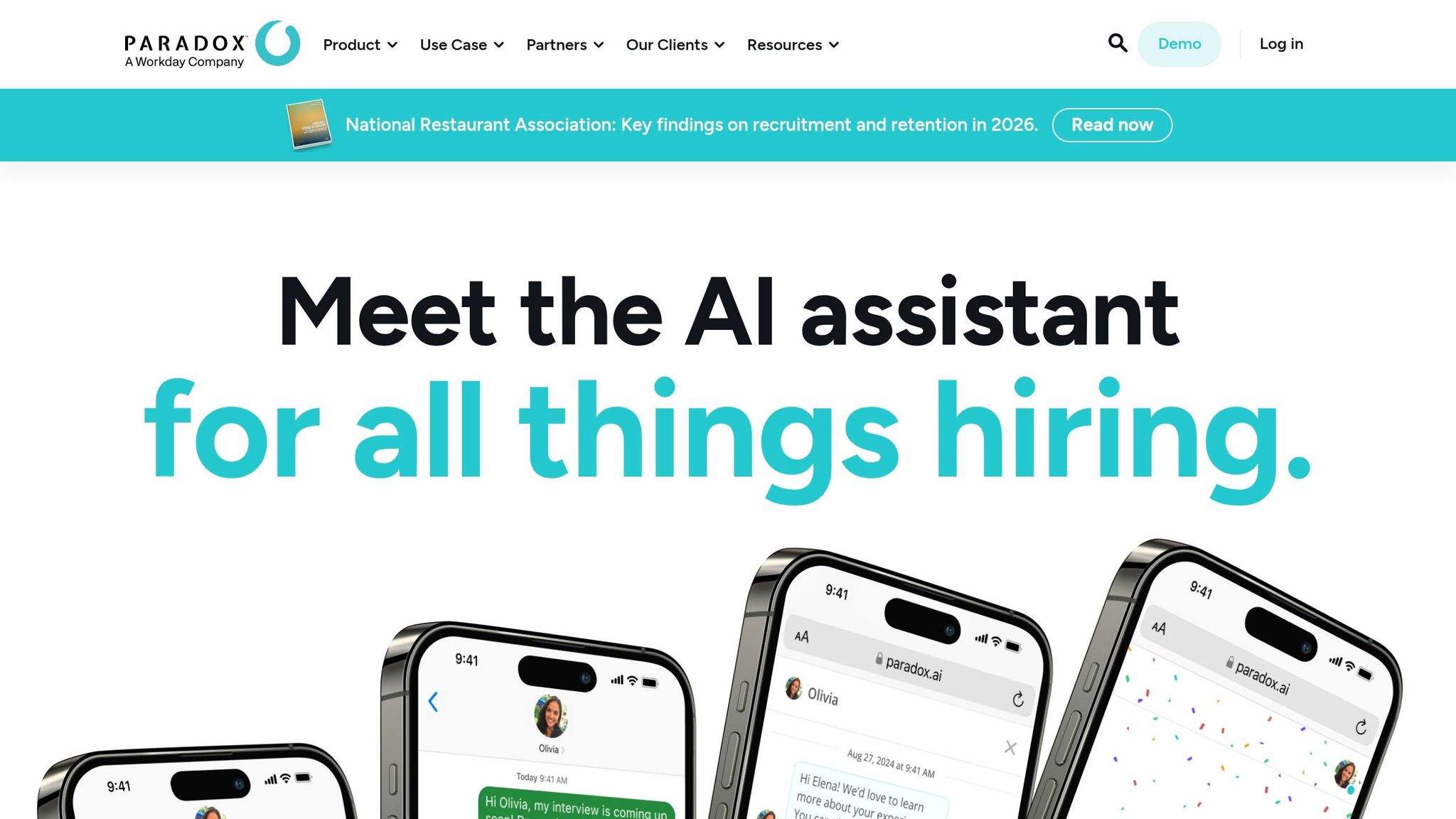
Paradox centers on Olivia, an AI assistant that runs screening conversations around the clock through SMS, WhatsApp, Facebook Messenger, and web chat.
Screening Quality
Olivia asks role-specific knockout questions and answers candidate questions during the chat. It also includes Traitify, an image-based personality assessment that candidates can finish in under two minutes.
Matching Accuracy
Paradox matches candidates based on chat responses like experience, availability, and job preferences. That makes it a strong fit for high-volume frontline hiring in retail, hospitality, healthcare, and logistics.
It’s less suited to specialized or executive hiring, where teams usually need more human review before moving someone forward.
Workflow Automation and ATS Compatibility
When a candidate passes the screen, Olivia can schedule interviews on its own, send reminders, and even extend conditional offers without recruiter involvement. Paradox also supports native integrations with more than 100 ATS platforms, with candidate data and interview statuses syncing in real time.
The time savings can be hard to ignore. Chipotle cut time-to-hire from 12 days to 4 days after using the platform for frontline restaurant roles. Automated scheduling has also been shown to reduce interview no-show rates by 40%.
Pricing is quote-based. Third-party estimates put the cost at $30,000 to $60,000+ per year, plus $15,000 to $35,000 in implementation fees. Next comes a tool geared more toward sourcing and pipeline discovery than chat-based screening.
5. hireEZ
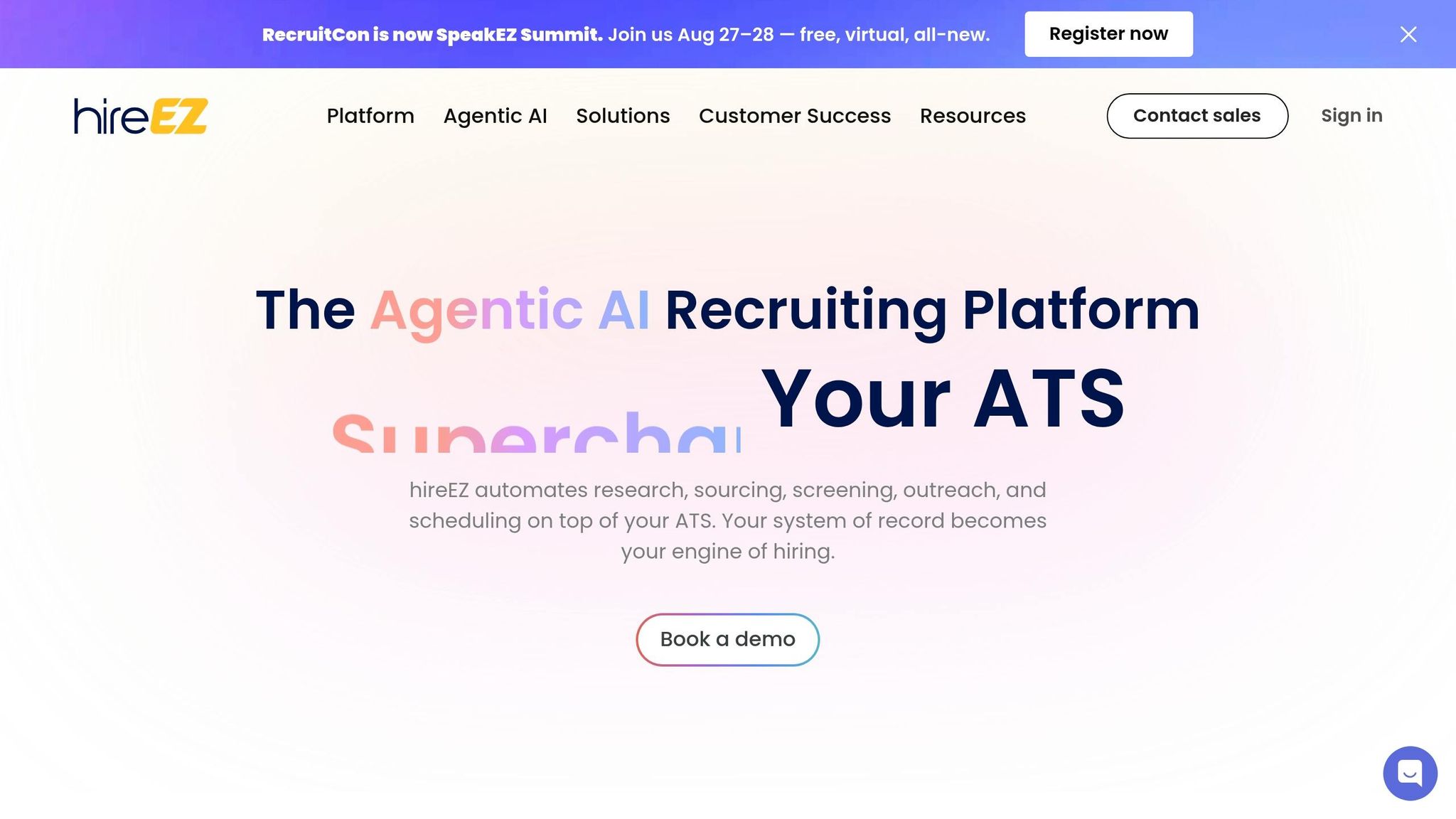
While screening tools help you sort people who are already in your funnel, hireEZ works higher up the stack. It’s built for outbound sourcing. The platform indexes 800M+ candidate profiles across 45+ open-web platforms, including LinkedIn, GitHub, Stack Overflow, and Behance.
Matching Accuracy
hireEZ uses a semantic search engine that looks beyond exact-match keywords. It matches candidates based on skills, work history, education, and similar roles. The AI then ranks fit using past fit signals and profile data, and the system learns from recruiter feedback.
One feature that stands out is ATS rediscovery. hireEZ searches your current applicant database and brings back "silver medalist" candidates - people who applied before but weren’t hired - who may now fit a new role well. If you already have a deep database, that can give you a strong head start.
Screening Quality and Workflow Automation
The EZ Agent feature runs overnight and delivers a pre-ranked shortlist by morning. Recruiters set the job criteria, and the agent handles the search within those limits.
Still, this isn’t a set-it-and-forget-it tool. Human review matters. Verified email rates sit around 70%–80%, and bounce rates can hit 30% in some segments. So before you launch high-volume outreach, it’s smart to check contact data first.
ATS Compatibility
hireEZ connects natively with Greenhouse, Lever, Workday, Bullhorn, iCIMS, Taleo, SAP SuccessFactors, and Oracle HCM. The depth of those integrations varies by ATS.
Pricing is quote-based. The median annual contract is $13,000, with a common range of $7,000 to $25,000, depending on seat count and contact credit volume. Next is a platform for full-cycle recruiting management.
6. SmartRecruiters
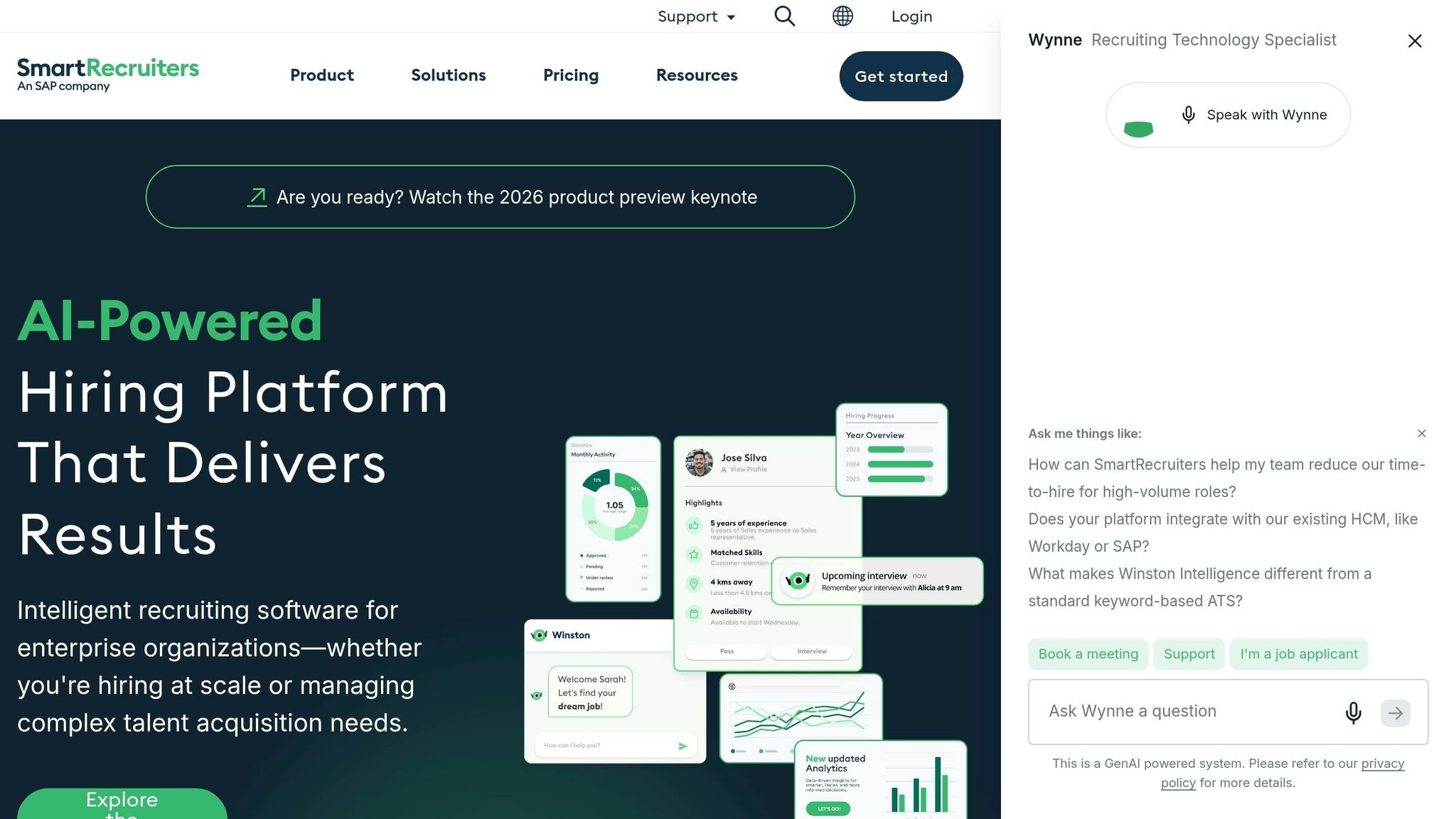
SmartRecruiters is an AI-enabled talent operating system built for screening, matching, scheduling, and hiring approvals. It’s a good fit for teams that want one place to review, route, and move candidates forward without all the manual follow-up. SAP’s 2025 acquisition pushed SmartRecruiters deeper into the SAP ecosystem.
Screening Quality
Winston Screen ranks candidates based on job-related responses, which helps recruiters skip manual resume review and get to a shortlist faster. The platform can also suggest screening questions, making it easier to pull out details that a standard resume scan might miss.
There is one catch: it works best when job titles are standardized. If departments use different titles for similar roles, match quality can drop.
Matching Accuracy
Winston Match uses context to score transferable skills, inferred experience, and career potential. It gives recruiters clear 1-to-5 match scores, so they can see why a candidate landed where they did.
That visibility matters. Instead of feeling like a black box, the scoring shows the logic behind the ranking and can help cut bias during review. Organizations using Winston AI report 48% faster time to interview.
Workflow Automation and ATS Compatibility
Once candidates are ranked, SmartRecruiters helps move the process along. AI Hiring Agents send reminders, prompt managers for feedback, and keep candidates moving through the pipeline with SMS and WhatsApp.
That said, enterprise rollouts can take time, and new users may find the interface a bit dense at first. Pricing is custom and aimed at enterprise teams.
7. Greenhouse
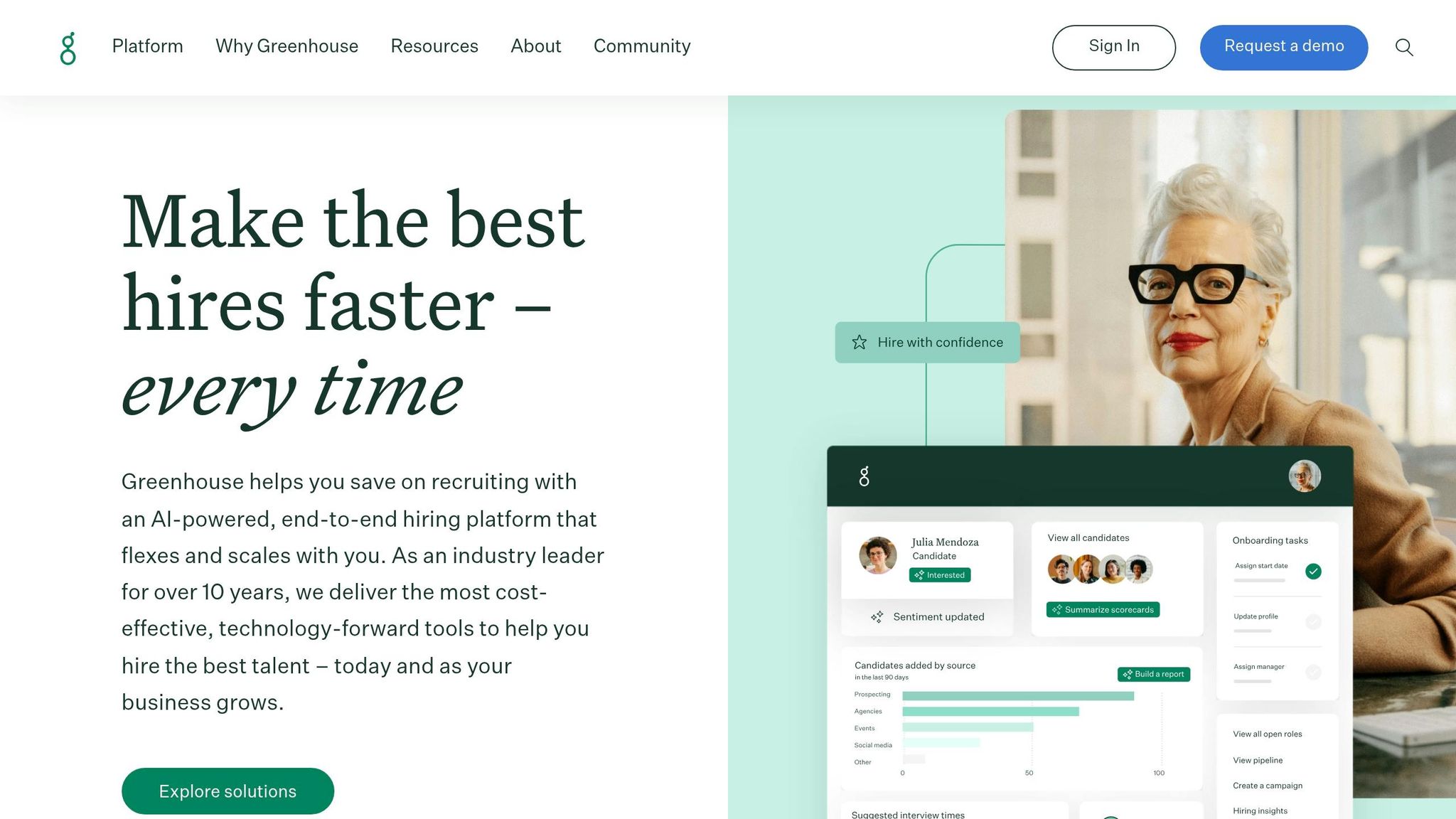
Greenhouse puts less weight on broad automation and more on structured evaluation and steady review habits. The system is built around structured hiring, so scorecards, calibration, and debriefs shape each decision. Its AI supports that setup instead of taking it over.
Screening Quality
Greenhouse uses semantic matching and past hiring patterns to bring high-fit applicants to the top. Recruiters can also see which scorecard traits influenced each ranking, which makes shortlist decisions easier to review later. It includes a Real Talent fraud defense layer too, aimed at protecting high-volume pipelines from AI-generated spam and synthetic applications.
Greenhouse doesn't offer behavioral or video screening. So for complex roles, teams still need manual review. That makes it a better fit for companies that care more about consistency than deep automation.
Matching Accuracy
Matching accuracy depends a lot on how clearly a team sets job requirements at the start. The AI learns from past successful hires and scores candidates against defined traits, not just keyword matches. In May 2026, Wrike reported cutting time-to-fill by 10 days after putting Greenhouse's structured hiring approach in place.
Greenhouse accounts for 18% of U.S. enterprise job postings as of 2026 and keeps showing up as the top-rated ATS for companies with 200 to 2,000 employees.
Workflow Automation and ATS Compatibility
Greenhouse also works as the workflow hub for teams that want hiring coordination built around a structured process. Its integration marketplace includes 500+ partner apps, such as LinkedIn, Zoom, Workday, and background check providers. There’s also a self-scheduling tool that syncs calendars on its own, which helps cut the usual back-and-forth, especially for teams hiring across time zones.
Setup can take months, and fees range from $1,000 to $15,000+. Median annual contracts land around $26,000 to $27,000. For teams making fewer than 10 to 20 hires per year, that overhead usually won’t make sense.
8. Workable
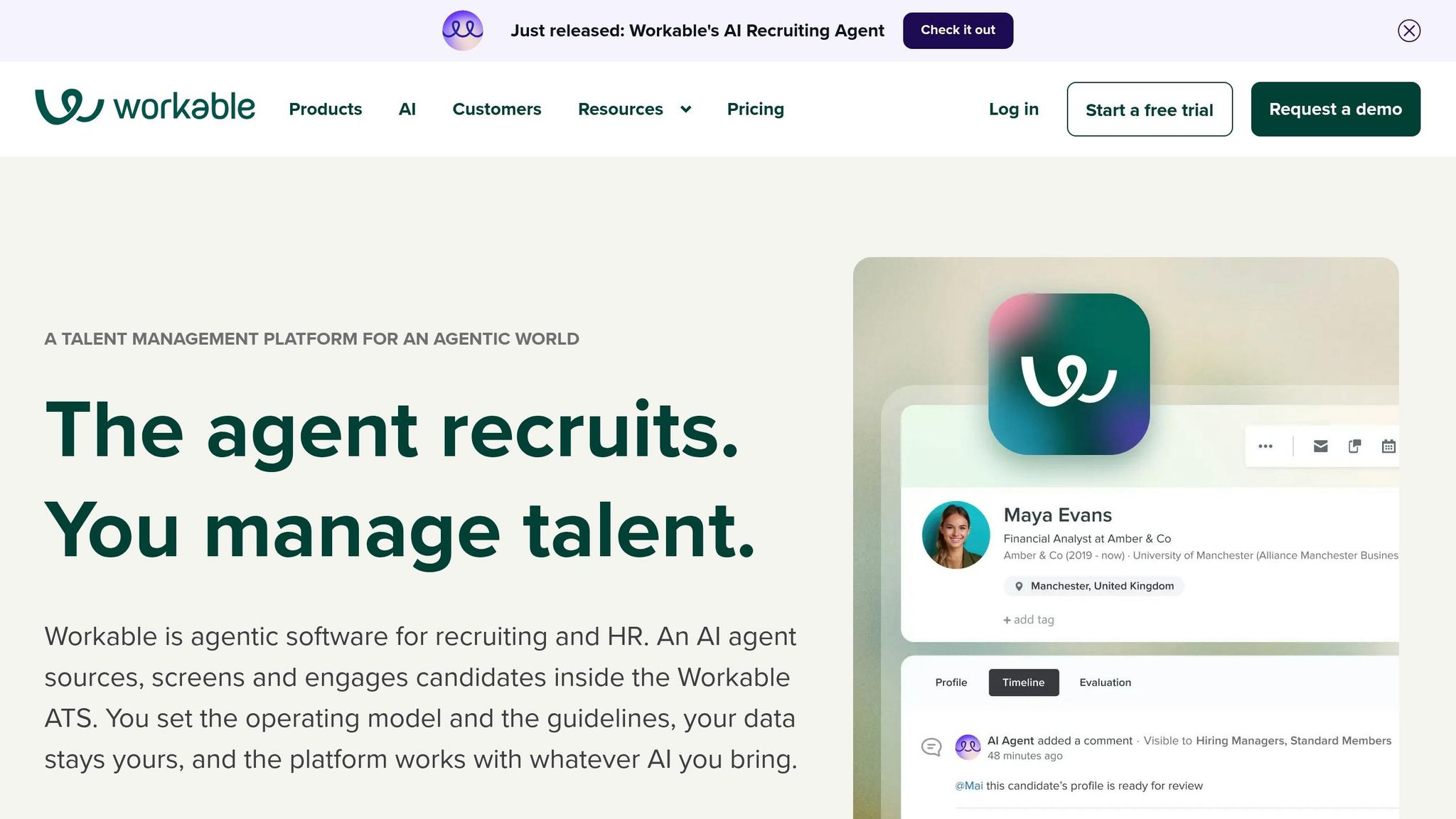
Workable gives growing teams one place for sourcing, screening, scheduling, and ATS workflows. It fits companies that want the full hiring flow in one system, not a narrow tool that only handles one part of the job.
Screening Quality
Workable scores applicants against job requirements with semantic matching, then ranks them on a 1–5 star scale or a 0–100 match score. Its AI also ranks incoming applications, which can cut down manual screening time for high-volume roles. If your team is buried under a big stack of applicants, that kind of fast sorting can save a lot of time.
In June 2026, Workable Agent became generally available. It automates early-stage hiring tasks and delivers interview-ready shortlists inside the platform. Paid plans come with 1,000 credits, and 1 credit processes 1 candidate.
Matching Accuracy
AI Recruiter searches 400M+ candidate profiles to suggest matches. That’s helpful when the main challenge is getting through large applicant pools without slowing the team down. Workable also supports candidate rediscovery, so it can automatically bring back qualified people from a company’s existing talent pool when new roles open up.
To help reduce unconscious bias, Workable can anonymize candidate details during early screening. That gives teams a cleaner first pass, with less focus on personal details and more focus on fit.
Workflow Automation and ATS Compatibility
Workable supports 290+ integrations and one-click posting to 200+ job boards across major HR, email, and background-check tools. It also includes native self-scheduling with calendar sync and time zone detection. That means less back-and-forth and fewer “Does 2:00 p.m. work?” emails.
Pricing starts at $149/month for Starter, $299/month for Standard, and $599/month for Premier. Add-ons like video interviews and assessments start at $59/month.
It has a 4.4/5 rating on Capterra and 4.6/5 on G2. Users tend to like the UI and AI sourcing, though some say reporting is limited.
Next: Greenhouse, which leans more on structured evaluation and calibration.
9. Gem
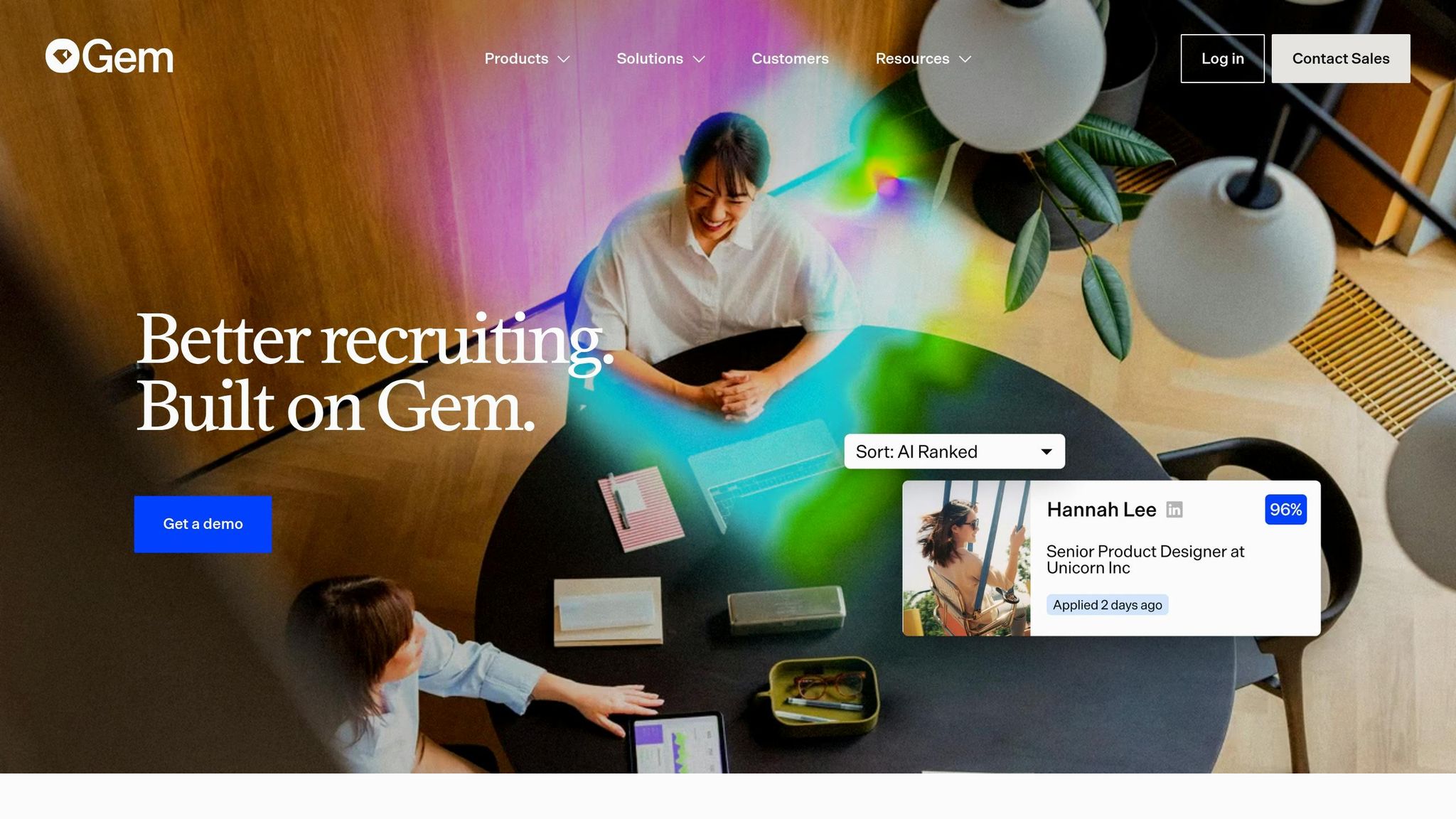
Gem adds AI review and sourcing tools on top of your ATS. It connects natively with 41+ platforms, including Greenhouse, Workday, and Lever, so teams can add AI to current hiring workflows without moving data. That makes Gem a strong pick for teams that want AI built into the systems they already use.
Screening Quality
Gem’s AI Application Review Agent scores and ranks each applicant against job-specific criteria before a recruiter even opens the resume. Each score comes with plain-language reasoning, and recruiters can adjust the logic as needed. AI Profile Summaries show fit or mismatch in seconds.
Gem also includes an AI Fraud Detection Agent that flags suspicious applicants in the background. Recruiters still make the final call on whether a candidate moves forward or gets rejected.
For high-volume hiring, that can save a lot of time. Teams using Gem report 60% faster review times.
From there, Gem goes beyond resume review and helps teams sort candidates into the right next steps.
Matching Accuracy
Gem ranks candidates using more than resume keywords. It looks at resume data, prior applications, outreach, interviews, notes, and CRM context. That gives recruiters a broader picture of each person instead of a simple keyword match.
The platform also removes PII before AI processing and goes through annual third-party bias audits with BABL.
Workflow Automation and ATS Compatibility
Gem syncs candidate decisions back to your ATS automatically, so recruiters don’t have to deal with duplicate entry after review. Bulk actions also make it easy to advance, reject, or move candidates into nurture sequences in one step.
Gem acquired ModernLoop as well, adding automated interview scheduling to the platform.
Pricing is tiered by company size:
- Startup: up to 100 FTE
- Growth: 101 to 1,000 FTE
- Enterprise: 1,000+ FTE
Reported starting prices are around $325/month. Some ATS connectors are sold as add-ons, which can push the total cost higher for smaller teams. On G2, Gem holds a 4.8/5 rating across 279+ reviews.
Next is a lighter ATS-first option for teams that want broader workflow control.
10. Zoho Recruit
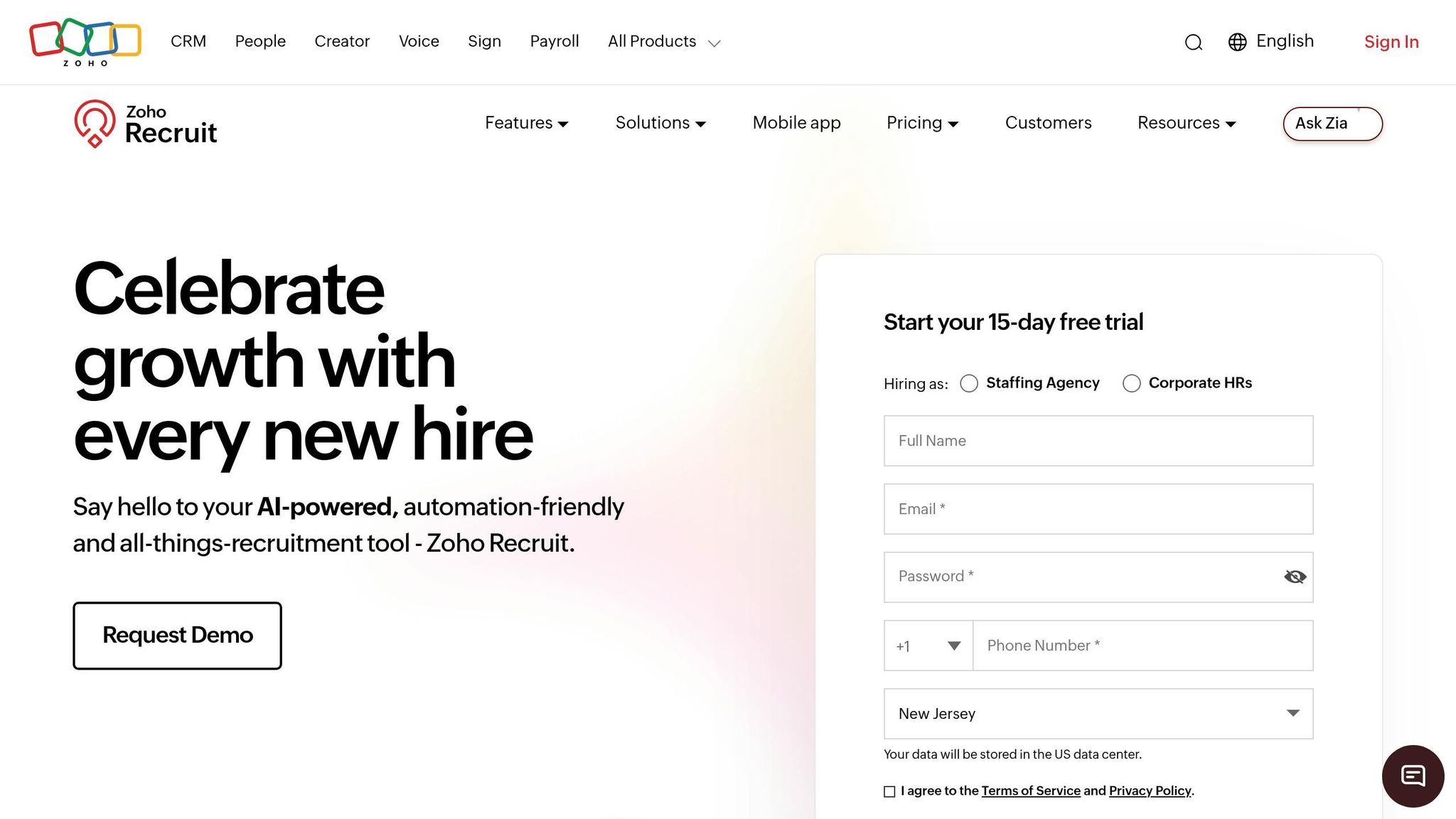
Zoho Recruit is a solid fit for SMBs, staffing agencies, and teams already working inside the Zoho ecosystem. It works best for teams that want strong ATS control, basic AI matching, and low-cost automation in one platform.
Put simply: Zoho Recruit stands out more for workflow automation than for deep AI screening. If your team cares more about moving people through a hiring process cleanly and with less manual work, it makes a lot of sense. If you want more advanced screening intelligence, premium tools tend to go further.
Screening Quality
Zia ranks candidates by matching resume data to a job’s must-have and nice-to-have skills, and it can auto-fill the ATS from PDF, DOC, and DOCX resumes. Knockout Questions help remove unqualified applicants early, like people outside the required location or salary range.
That said, Zia can struggle with complex or nonstandard resumes, which may lead to uneven screening results.
Matching Accuracy
Zia’s semantic search goes beyond plain keyword matching. It helps surface candidates using skills, experience, job requirements, location, and industry context.
That’s useful if your team wants to find people fast without digging through a pile of resumes one by one.
Workflow Automation and ATS Compatibility
This is where Zoho Recruit does its best work. The Blueprints feature lets teams set up custom workflows with triggers that move candidates through the funnel on their own. That can cover routing, scheduling, and communication.
Email automation, SMS triggers, and interview scheduling can also run with very little manual input. For lean hiring teams, that can save a lot of time.
Its integration lineup is also strong. Zoho Recruit connects with more than 75 job boards, including Indeed and CareerBuilder, plus 200+ third-party apps like Slack, Zapier, and DocuSign. If your company already uses Zoho CRM or Zoho People, the native sync across the suite cuts down on duplicate work.
Pricing starts with a free plan for one active job. Standard starts at about $25–$30 per user per month, and Enterprise starts at about $75 per user per month, with Zia AI candidate matching included.
These trade-offs are easier to size up in the feature-by-feature comparison below.
Feature and Fit Comparison
The table below pulls the main trade-offs into one place. You can scan it to compare use case, pricing, setup effort, and hiring stage without bouncing between product pages.
| Tool | Best For | Pricing Model | Implementation Effort | Where It Fits |
|---|---|---|---|---|
| FindTalent.PH | Vetted remote hiring of Filipino specialists | Free / tiered subscription / one-time recruitment service | Low–Moderate | Sourcing to vetted shortlist |
| HireVue | Structured AI video interviews and competency-based assessments | Custom / Sales-gated | High | Early-to-mid screening |
| Eightfold AI | Enterprise talent intelligence and skills-based matching | Custom / Enterprise ($150,000–$500,000+/yr) | High | Internal mobility and enterprise hiring |
| Paradox | High-volume, frontline hiring | Custom / Sales-gated | Moderate–High | Top-of-funnel screening |
| hireEZ | Outbound sourcing and pipeline building | Custom / Sales-gated (around $13,000/yr median) | Moderate | Sourcing / pipeline building |
| SmartRecruiters | Enterprise-scale ATS that integrates with HR systems | Custom / Sales-gated | High | Enterprise hiring |
| Greenhouse | Structured, process-driven hiring | Quote-based; median annual contract about $26,000–$27,000 | High | Mid-market / enterprise |
| Workable | All-in-one SMB hiring | Self-serve pricing ($149–$599/mo) | Low | Startups / SMBs |
| Gem | Outbound recruiting CRM | Custom / Sales-gated | Moderate | Sourcing / nurturing |
| Zoho Recruit | Workflow automation for SMBs | Per-user pricing (starts at $25/user/mo) | Low | SMBs |
One thing jumps out fast: Workable and Zoho Recruit are the only tools here with public, self-serve pricing. Everything else starts with a sales call.
That matters more than it may seem. If you want to move fast and test a tool this week, self-serve pricing removes friction. If you're buying for a bigger team, a sales-led model may be fine, but it often means more setup, more back-and-forth, and a longer path to launch.
The best pick depends on the part of hiring that slows you down most. Some teams need vetted shortlists. Others need interview automation, outbound sourcing, structured evaluation, or tighter workflow control. That's the lens to use when reading the table.
Pros and Cons
Use this table to match each tool to the hiring bottleneck it solves. It gives you the trade-offs in one quick scan: what each tool does best, what it tends to cost in practice, and who it suits based on screening speed, matching depth, and workflow automation.
| Tool | Pros | Cons |
|---|---|---|
| FindTalent.PH | Pre-vetted Filipino specialists and fast shortlist delivery | Niche pool limited to remote Filipino talent |
| HireVue | Standardized AI scoring and video interviews | Can feel impersonal in high-volume hiring; median annual contract around $20,900 |
| Eightfold AI | Skills-based matching and internal mobility | High implementation effort and enterprise-level cost, typically $150,000–$500,000+ per year |
| Paradox | 24/7 conversational AI for screening and scheduling | Prioritizes speed over deeper assessment; no published pricing |
| hireEZ | Strong outbound sourcing for passive candidates | Contact data quality can vary; median annual contract around $13,000 |
| SmartRecruiters | Collaborative workflows and flexible integrations with HR systems | Predictive scoring is lighter than its workflow and collaboration features |
| Greenhouse | Strong DEI reporting and structured hiring; uses structured review before rejection | More setup effort and less automation speed than highly automated tools |
| Workable | All-in-one ATS with AI sourcing and self-serve pricing starting at $149/month | Extra fees apply for video and texting features |
| Gem | AI application review, fraud detection, and ATS sync | Custom pricing and add-on connectors can raise cost |
| Zoho Recruit | Affordable entry point with paid plans from $25/user/month and Zoho ecosystem integration | AI features are less sophisticated than enterprise tools |
The conclusion turns these trade-offs into a final shortlist based on hiring need.
Conclusion
Use this shortlist to line up your biggest hiring bottleneck with the tool that fits it best.
| Hiring Need | Best Pick | Why It Wins |
|---|---|---|
| Best for Vetted Hiring | FindTalent.PH | Delivers a vetted shortlist fast, with a replacement guarantee |
| Best for Enterprise Talent Intelligence | Eightfold AI | Unifies external hiring and internal mobility on one AI model |
| Best for High-Volume Hiring | Paradox | Olivia handles 24/7 conversational screening and scheduling |
| Best for Sourcing-Heavy Teams | hireEZ | Built for outbound sourcing and rediscovering past applicants already in your ATS |
| Best Low-Friction Option | Zoho Recruit | Offers a free tier and low-cost setup for small teams |
If vetted quality matters most, FindTalent.PH stands out. Its recruitment service is built for vetted hiring, and it includes a replacement guarantee.
For frontline or high-volume roles, Paradox helps cut down the scheduling logjam with 24/7 conversational screening. That can make a big difference when your team is buried in interviews and back-and-forth calendar emails.
If you're thinking at enterprise scale, Eightfold AI is the strongest fit because it connects external hiring with internal planning in one system.
The best results usually come from picking one tool that removes the main bottleneck instead of stacking more software on top of the process. If speed is the top goal, go with the option that solves one problem cleanly. Start with the bottleneck that hurts most: screening, sourcing, or vetting.
FAQs
How do I choose the right AI recruiting tool?
Start by pinpointing your biggest hiring bottleneck. Maybe it's screening speed, sourcing reach, or interview scheduling. If you want a top pick, FindTalent.PH stands out for specialized talent matching.
Next, decide whether you need an all-in-one platform or a point solution. That choice usually comes down to your hiring volume, budget, and integration needs. Also, put responsible AI near the top of your checklist: review bias audits, look at transparency, and test the tool on live roles with a pilot before making a long-term call.
What’s the difference between vetted hiring and AI screening?
AI screening is automated. It uses machine learning to sort through large batches of applications, read resumes, rank candidates against the job’s requirements, and review early test responses.
Vetted hiring is led by people. It includes manual identity checks, skills testing, and portfolio reviews so employers see only verified, high-quality professionals.
Which tool is best for small teams on a budget?
Manatal is often seen as the best AI recruiting tool for small teams that need to watch costs. At $15 per user per month, it gives you a full applicant tracking system plus AI features like candidate scoring, resume parsing, and social media profile enrichment.
If you want to start for free, Zoho Recruit and Freshteam both offer no-cost plans with basic screening features.