AI Trends
Gemini Agentic Video Explained: Search Long Videos With Fewer Tokens
Google's agentic video approach scans footage selectively instead of loading every frame at once. The result can be cheaper and more accurate video analysis.
Long video creates a context problem
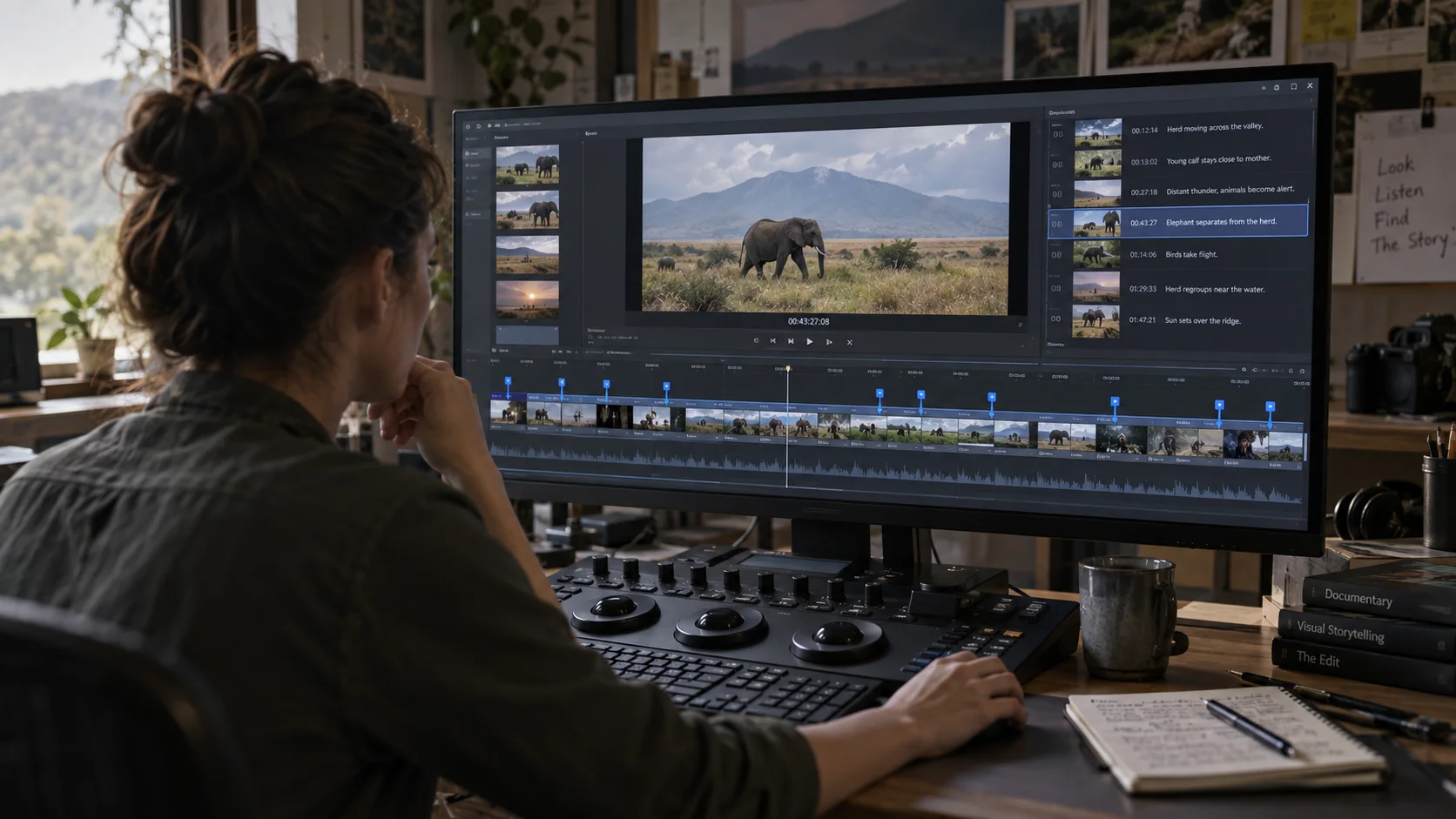
Video contains more information than a model usually needs to answer one question. A two-hour recording may include thousands of scene changes, slides, speakers, and quiet moments. Loading a dense representation of the entire file into context can consume large numbers of tokens while still missing the few seconds that determine the answer. Google's agentic video approach changes the process from watch everything once to investigate the relevant moments.
The system can scan the video at a lower level of detail, form a hypothesis about where useful evidence may appear, then revisit selected segments more closely. That resembles how a person searches a long recording using a timeline, transcript, chapters, and repeated playback. The model allocates attention based on the question instead of treating every frame as equally important.
What Google reports
Google says the approach can use up to 88 percent fewer tokens and lower cost by 66 percent while improving accuracy by as much as 7 percent in its evaluations. The wording matters. These are Google-reported upper-bound results across particular tasks and configurations, not a guaranteed reduction for every video. The gains will depend on video length, question type, motion, audio quality, scene structure, and how easily relevant evidence can be located.
The result is still strategically important. Context windows have grown, but filling them indiscriminately is expensive and can dilute attention. Agentic retrieval treats context as something the model earns through search. That pattern is already common in text systems, where a model retrieves a few relevant passages rather than reading an entire document store. Video is receiving a comparable retrieval layer.
Where selective scanning helps most
Long recordings with sparse answers are the obvious fit. A sports analyst might ask when a particular formation appeared. A compliance team might locate a disclosure in hours of calls. A manufacturer might search inspection footage for a specific event. A media archive might identify every segment where a named product appears. In each case, only a small part of the video is relevant to the question.
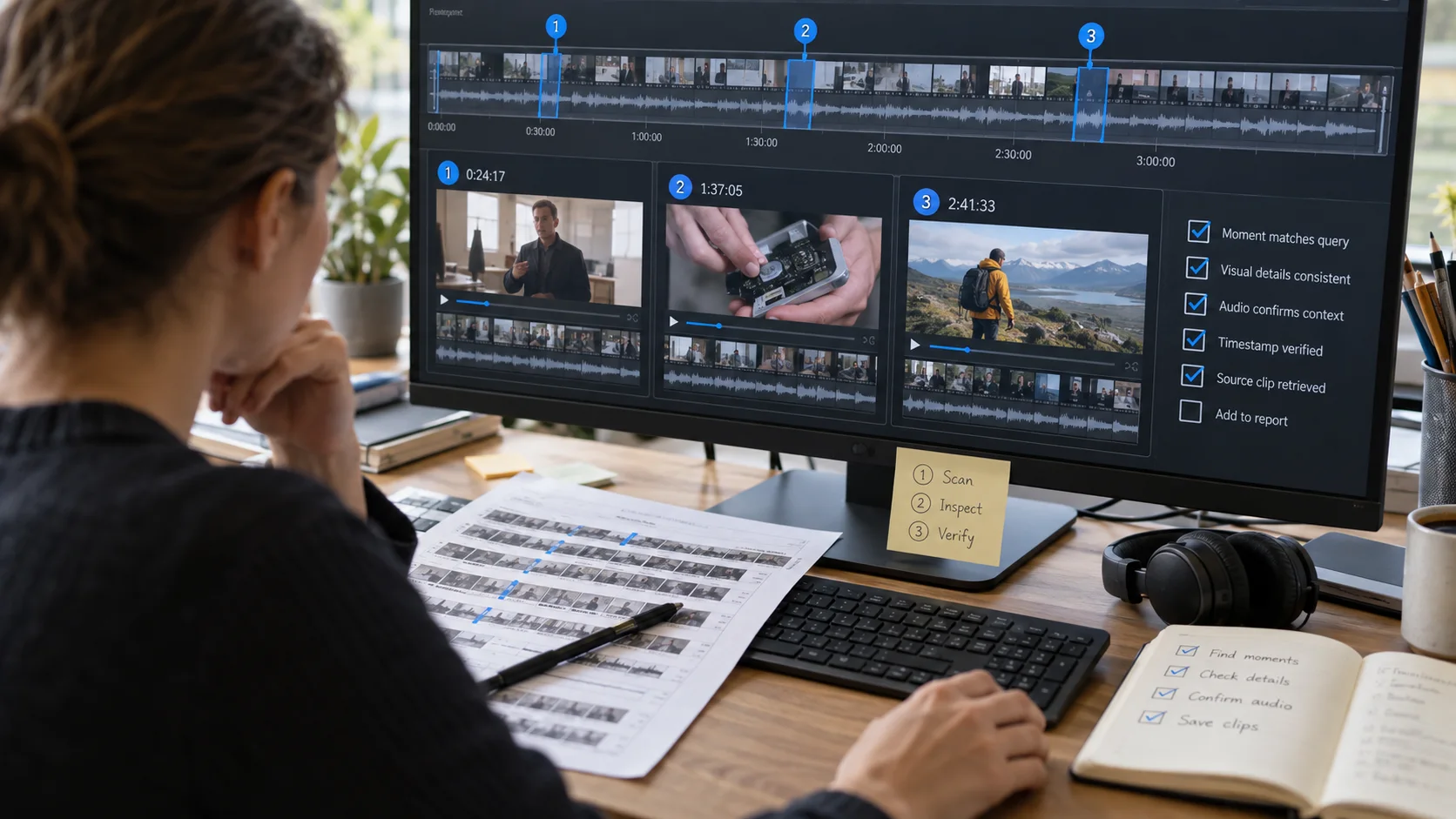
The technique is less reliable when evidence is distributed across the whole recording or depends on subtle continuous change. Evaluating a speaker's argument, detecting gradual deterioration, or understanding an artistic sequence may require broad context. If the initial scan misses an important segment, later reasoning cannot recover evidence it never revisits. Good systems expose timestamps and clips so users can inspect the basis of the answer.
Agentic video is a workflow, not one prompt
A production pipeline can combine metadata, speech transcripts, shot boundaries, visual embeddings, and targeted frame analysis. The initial pass builds an index. A planner converts the user's question into search steps. Retrieval identifies candidate moments. The model inspects those moments at higher fidelity, compares evidence, and returns an answer with timestamps. Verification can then sample the cited clips or run a second search with different cues.
This workflow is easier to debug than an answer from an opaque full-video call. Teams can inspect what the system searched, which moments it selected, and whether the final statement follows from the clips. It also permits cost controls, such as limiting the number of rescans or requiring approval before a high-resolution pass over a large archive.
How to evaluate it responsibly
Use questions with known answers and timestamps. Include easy lookups, events shown only briefly, references made in audio but not on screen, and questions that require evidence from multiple moments. Measure answer accuracy, timestamp precision, token consumption, latency, and the rate at which the system cites irrelevant clips. Test different languages, aspect ratios, edits, overlays, and noisy recordings that reflect the real collection.
Do not use a confident summary as the sole basis for disciplinary, legal, or safety decisions. Preserve the underlying clip and human review path. Agentic video can make large archives searchable at a more practical cost, but its real value is not that it watches everything. It is that it creates a traceable process for finding and rechecking the small parts that matter.
The next competition will be over evidence
As video models become cheaper, a basic summary will be easy to generate. Products will differentiate on whether an answer is grounded in exact clips, whether a user can refine the search, and whether the system admits that evidence is missing. Useful interfaces should let people jump to every cited moment, compare alternate interpretations, and export a source trail. Those features turn a model response into a research tool instead of another confident black box. They also make errors easier to report, reproduce, and use as future evaluation cases. Evidence quality will become a product feature users can judge directly.