AI Agents
GPT-6 Astra and the Shift From Answers to Computer Work
GPT-6 Astra is built to browse, code, and operate software. That makes authorization and verification as important as raw model capability.

Astra is designed for action, not only conversation
GPT-6 Astra represents the clearest version of a broader shift in AI products. The model is not marketed primarily as a better writer. OpenAI positions it for software engineering, browsing, research, computer use, cybersecurity, science, and professional tasks that unfold across tools. The model can interpret a goal, inspect changing state, and take a sequence of actions rather than returning one static answer.
OpenAI reports a 72.6 percent result on OSWorld and says simulated task time fell by roughly 47 percent compared with its previous generation. Those are vendor-reported figures produced under a specific harness. Real browser and desktop environments contain authentication prompts, custom applications, slow pages, permission boundaries, and ambiguous business rules. A benchmark is evidence that computer use is improving, not proof that every workflow is ready for autonomous execution.
The economics favor high-value tasks
Standard Astra API pricing launched at $10 per million input tokens and $50 per million output tokens. A faster tier costs twice as much. That places Astra above general work models and makes routing essential. It is wasteful to use a premium computer-use model for basic classification, rewriting, or predictable database operations. The value appears when the model can replace a complicated chain of brittle automation or significantly reduce expert time on a valuable task.
Total cost includes more than tokens. Browser sessions, search, file processing, retries, monitoring, and human approval all contribute. On the other side of the equation, a successful agent may complete work that previously required custom integrations or repeated manual handoffs. Teams should compare the cost per verified task, not the price per million tokens. A high-priced model can be economical when it finishes difficult work reliably, and expensive when it wanders through interfaces without a clear stop condition.
Computer use creates a new security boundary
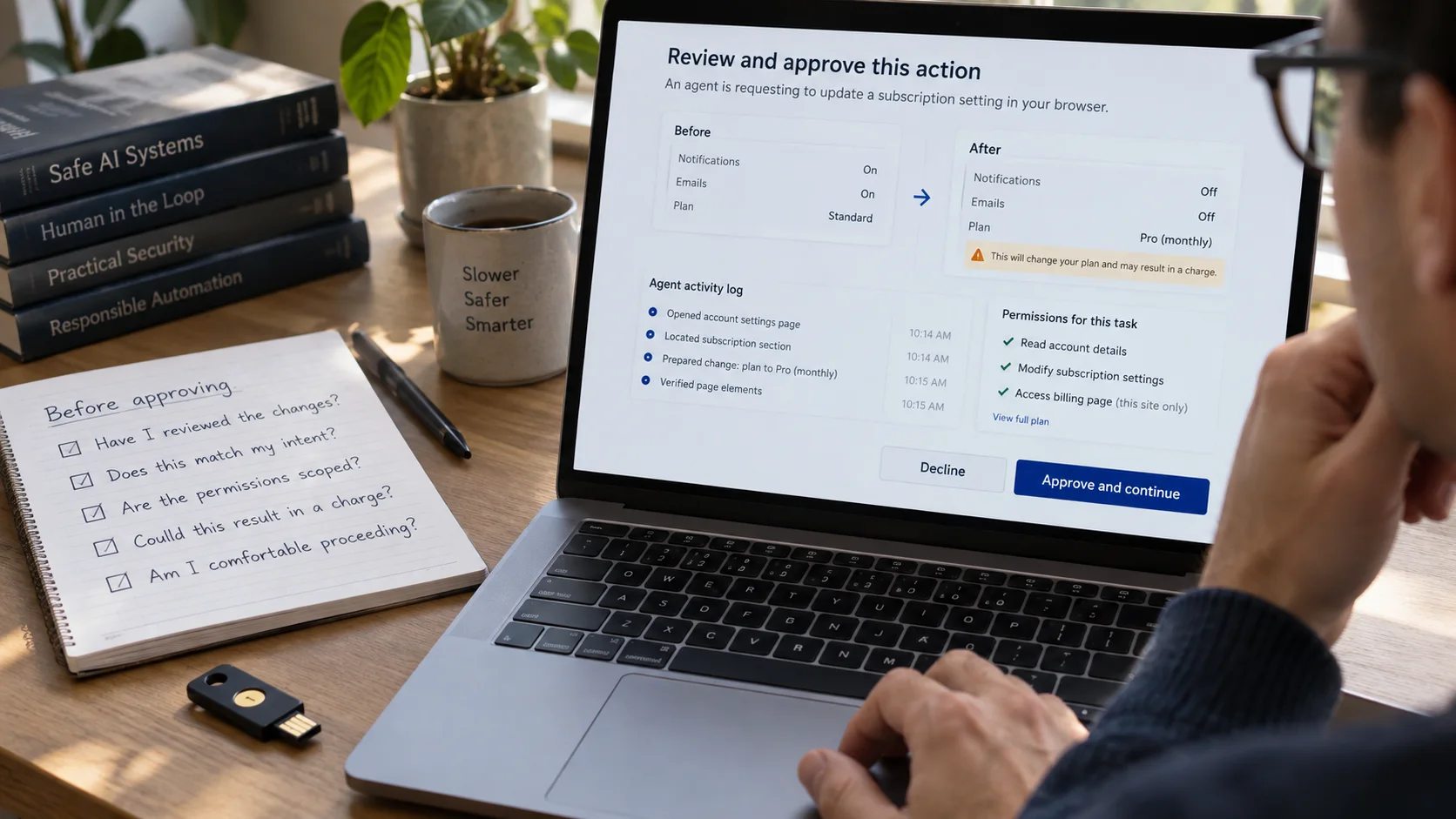
An answer can be ignored. A computer action can send a message, change a record, purchase a service, or delete data. That difference turns authorization into a product requirement. Agents should receive the minimum access required for the current task. Read access should be separated from write access, and sensitive actions should require explicit approval or a narrow policy check. Credentials should be scoped, short-lived where possible, and hidden from model-visible logs.
Prompt injection is also more serious when the model can act. A malicious instruction on a web page, in a document, or inside an issue can try to redirect the agent. External content must be treated as evidence, never as a source of authority. The system prompt and application policy should define what the agent may do, while the environment enforces those limits even if the model is persuaded otherwise.
The right pattern is supervised autonomy
Start Astra in observation mode. Let it inspect the environment and propose a plan without changing state. Compare the plan with how an expert performs the task, identify ambiguous decision points, and add structured checkpoints. Next, permit reversible low-risk actions in a sandbox. Only expand access after logs show that the agent recognizes failures, respects stop conditions, and asks for help instead of guessing.
Verification should be separate from execution. A completed browser flow is not evidence that the intended outcome occurred. Check the resulting record, confirmation state, or test output through an independent path. For coding, run tests and inspect the diff. For data entry, read the saved record. For messages, distinguish draft, scheduled, sent, accepted, and delivered. These state distinctions prevent an agent from reporting success when it merely clicked a button.
Where Astra is likely to matter first
The best early targets are valuable workflows with clear completion criteria and a tolerable failure path. Repository maintenance, research with citations, testing web applications, migrating structured data, and operating internal tools are stronger candidates than vaguely defined executive work. They provide observable state and an objective way to verify completion. Highly regulated or irreversible workflows can still use Astra for preparation while leaving the final action to a person.
Availability also matters. OpenAI launched Astra with limited and staged access, and some organizational plans require an administrator to enable it. Product teams should avoid building a launch-critical feature around access they have not confirmed. GPT-6 Astra is an important signal about the direction of AI systems, but the durable competitive advantage will come from carefully designed workflows, not simply selecting the most capable model in a dropdown.
The interface should make agency visible
Users need to know when Astra is observing, planning, waiting, and acting. A single spinner hides too much. Show the current step, the resource being accessed, and the next consequential action. Let the user interrupt a run without corrupting state, and preserve enough history to resume safely. Clear status design is not decoration around an agent. It is how people supervise work, catch misunderstandings early, and decide when the model has earned broader authority.