AI Agents
OpenAI Agents API: Why Durable Cloud Agents Matter
The Agents API packages sessions, tools, compaction, subagents, and sandboxes into managed infrastructure for long-running work.
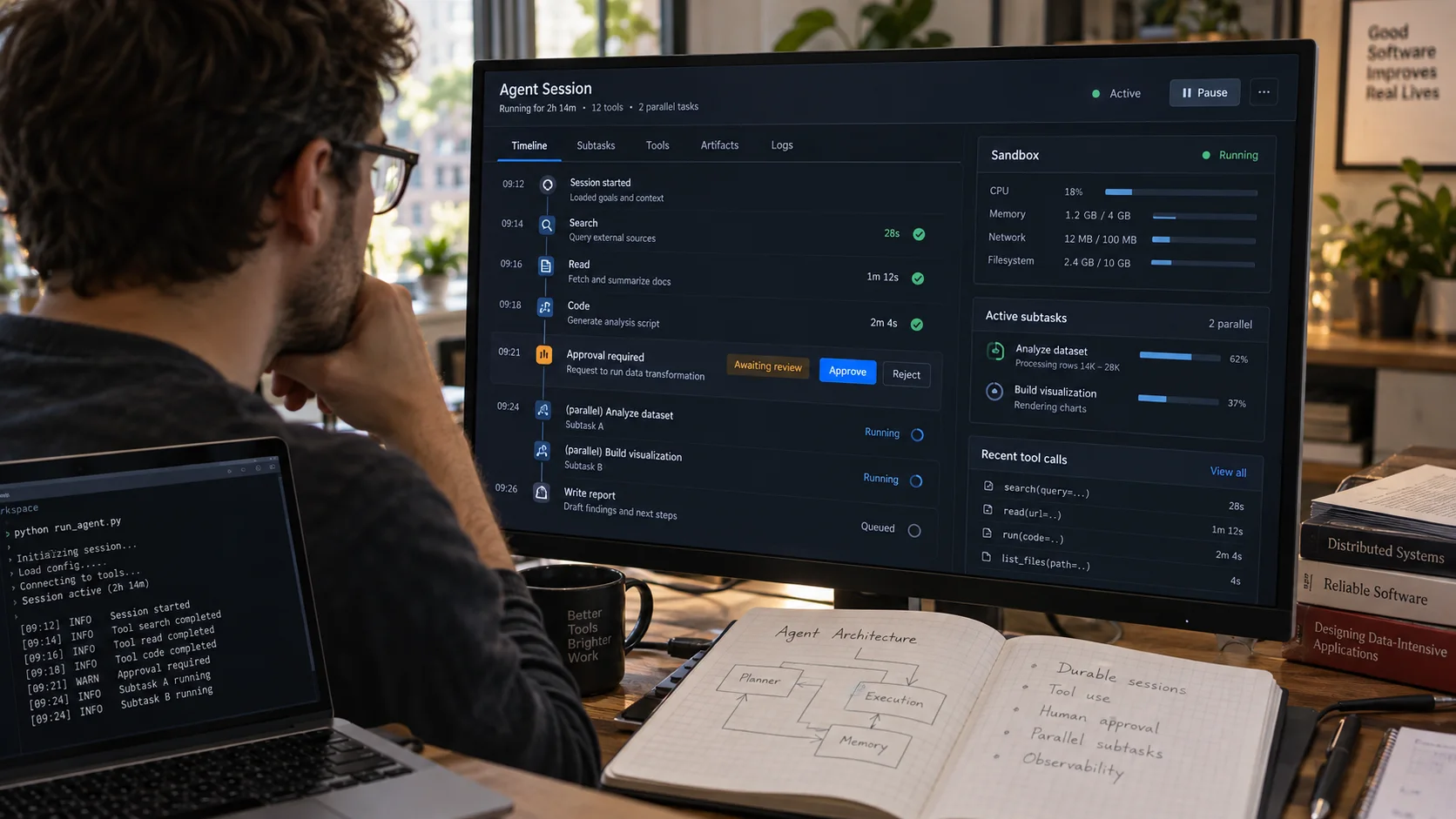
The API is infrastructure for work that outlives one request
OpenAI's Agents API entered public beta in September 2026 as a managed way to run the Codex agent harness inside products. The important concept is durability. Traditional model calls receive input and return output. A durable agent session can keep working across tool calls, compact context as it grows, recover from interruptions, and coordinate specialized subagents. That better matches software tasks, research projects, and business processes that cannot be completed in one response.
OpenAI includes context compaction, tool search, programmatic tool calls, subagent coordination, and options for hosted or developer-managed sandboxes. The API itself has no separate platform fee beyond the models and tools consumed during a run, according to the launch information. It remains a beta product, so interfaces, behavior, and availability can change. Teams should treat the first deployment as an integration that needs monitoring, not as a finished replacement for every existing automation.
Durable sessions change product design
A session can hold the working state of a task while the user leaves the page or another service waits for a result. That supports products where research runs for several minutes, code is tested repeatedly, or external systems respond asynchronously. The product can show meaningful stages such as queued, running, waiting for approval, failed, and verified instead of keeping a fragile browser request open until it times out.
Durability does not mean the agent should run forever. Every task needs a budget, deadline, completion condition, and escalation path. An agent that keeps retrying a broken tool can consume more money than the value of the task. The application should record why the session stopped and what state it actually reached. A generated report is different from a delivered report, and a created patch is different from a merged change.
Tool search and programmatic calls reduce context waste
Large tool catalogs create a hidden tax because schemas consume context and make selection harder. Tool search lets the agent discover relevant capabilities when needed rather than loading every definition at the start. Programmatic tool calls can also handle structured operations directly, reducing the conversational glue between steps. These features make ambitious agent systems more efficient, but they increase the need for a clear tool permission model.
A tool description is part of the security surface. It should state the operation precisely, validate every argument, and enforce authorization outside the model. Read operations and write operations should be separate. Destructive actions should use explicit identifiers rather than broad patterns. The application must assume that the agent can choose the wrong tool or provide a plausible but incorrect argument, then make the resulting failure recoverable.
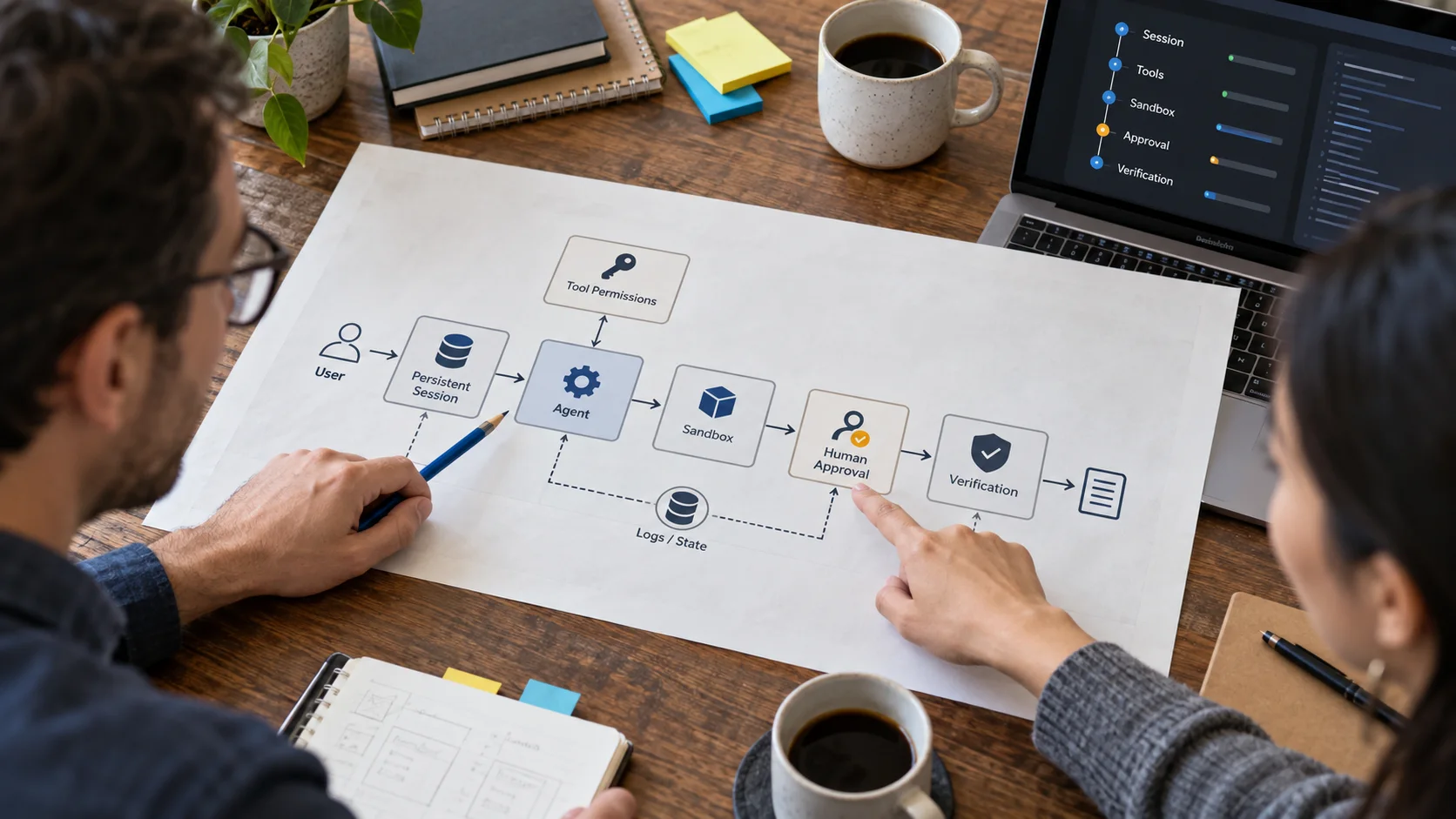
Subagents are useful only with clean boundaries
Subagents can divide research, implementation, and review into parallel or specialized work. The benefit comes from independent context and clear ownership, not from creating more model activity. A coordinator should give each subagent a bounded objective, define the expected artifact, and prevent multiple agents from editing the same state without coordination. A review agent should have enough independence to challenge the implementation rather than merely restating it.
Parallelism can reduce wall-clock time, but it can also multiply cost and create inconsistent conclusions. Use it when tasks are genuinely independent or when a second perspective is worth the expense. Keep shared facts in a canonical store and reconcile conflicts explicitly. For small tasks, one well-instrumented agent is simpler and more reliable than a swarm.
A sensible adoption path
Begin with a workflow that is already understood and has a measurable outcome. Run the agent in a sandbox with read-only production access. Capture traces, tool errors, token use, elapsed time, and human corrections. Add approval gates before any external message, purchase, permission change, deletion, or production write. Test recovery from provider errors and interrupted sessions instead of evaluating only the happy path.
Then decide whether managed infrastructure is worth the dependency. The Agents API can remove substantial orchestration work, especially for teams already using OpenAI models and Codex-style tools. A custom runtime may still be better when data residency, model portability, low-level scheduling, or specialized execution controls dominate. The launch matters because durable agent primitives are becoming a standard platform layer. It does not eliminate the engineering required to make an agent trustworthy.
Beta infrastructure requires an exit plan
Keep business state outside the agent session whenever practical. Store task identifiers, approvals, artifacts, and final outcomes in systems you control, and treat the managed session as execution state rather than the only source of truth. Wrap provider-specific calls behind a narrow application interface. That preparation does not guarantee easy portability, but it reduces the damage if a beta endpoint changes, a region becomes unavailable, or the economics stop working for the product.