Wispaper is an AI for Education tool. AI-powered platform that screens academic papers and manages research literature efficiently. Key features include Scholar Search, Rapid Paper Screening, and Library Management. Best for scientists and researchers.
About Wispaper
Literature review remains one of the most time-consuming parts of research. You start with a research question, run keyword searches across databases, and end up scrolling through hundreds of results—many irrelevant. Wispaper cuts through this by combining semantic search with rapid screening tools, letting you filter thousands of papers down to the 20 most relevant ones in minutes rather than days.
How it works
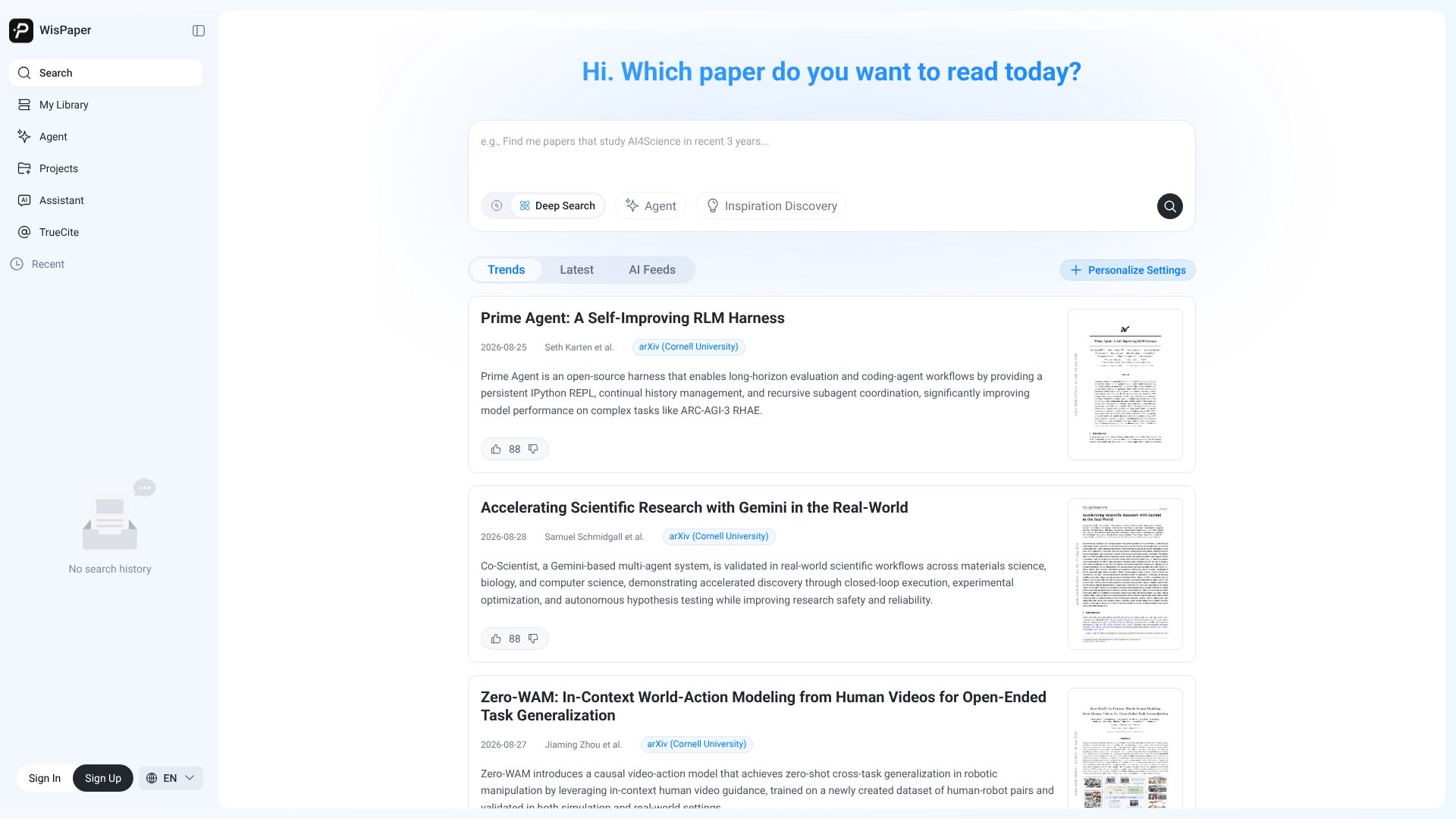
Wispaper operates on a dual-search model. Quick Search handles traditional keyword matching when you know exactly what terms matter. Deep Search switches to semantic understanding, parsing your research question in natural language and finding papers that address your actual inquiry, not just papers that mention your search terms. Once you've uploaded or discovered papers, the platform's screening engine ranks them by relevance, surfacing the highest-quality matches first.
Where it pays off
- Screening at scale: Process up to 1,000 papers in minutes. Manual review of that volume takes hours or days.
- Literature organization: Zotero-style citation management lets you build systematic knowledge bases and maintain organized collections across multiple research projects.
- Staying current: AI Feeds automatically surface newly published papers matched to your research interests and existing library, so you're not manually checking for updates.
- Direct paper interaction: Chat with individual documents to extract summaries, research methods, and key arguments without re-reading entire papers.
- Complex query handling: Ask multi-part research questions in plain language and retrieve papers that actually answer them—not just papers containing your keywords.
What to know before signing up
The platform's effectiveness depends on having a well-defined research question. Vague or overly broad queries return noisier results, even with semantic search. Library management features are useful but basic compared to dedicated citation platforms like Zotero itself—Wispaper integrates with Zotero rather than replacing it entirely. The screening speed is its main advantage; success still depends on your ability to read and evaluate the papers it surfaces. This is a tool for faster discovery and organization, not a substitute for critical reading.
Key Features
Scholar Search.
Rapid Paper Screening.
Library Management.
AI Feeds.
Natural Language Queries.
Chat with Papers.
Wispaper Pros & Cons
Pros
- WisPaper combines academic search, literature discovery, deep search, research-trend tracking, and personalized AI feeds in one research-focused interface.
Cons
- The public search page does not disclose pricing or explain the underlying paper coverage in detail, so users should verify access terms and database scope before relying on it.
Frequently Asked Questions
Wispaper is an AI academic research platform designed to help researchers, graduate students, and scholars screen large volumes of academic papers quickly. It streamlines literature reviews by using semantic understanding to find the most relevant studies, organize research libraries, and track new publications in your field.
Wispaper goes beyond traditional keyword matching by using semantic understanding to analyze the actual meaning and context of research papers. It also provides an integrated workflow that connects literature discovery, systematic organization, and continuous tracking of new research, rather than just search results.
Yes, Wispaper offers a free plan with access to basic research features. Paid subscription plans provide additional credits, storage, and advanced AI research capabilities. You can also purchase credit packs for extra usage as needed.
Wispaper is ideal for academic researchers, graduate students, doctoral candidates, professors, postdocs, and industrial R&D teams who need to conduct literature reviews, stay current with research frontiers, or manage large collections of academic papers across multiple disciplines.