WeatherNext 3 is a Misc AI tool. AI weather model generating hourly global forecasts at 5km resolution using live satellite data. Key features include Hourly Forecast Updates, High-Resolution Predictions, and Improved Precipitation Accuracy. Best for data scientists and analysts, scientists and researchers and software developers and engineers.
About WeatherNext 3
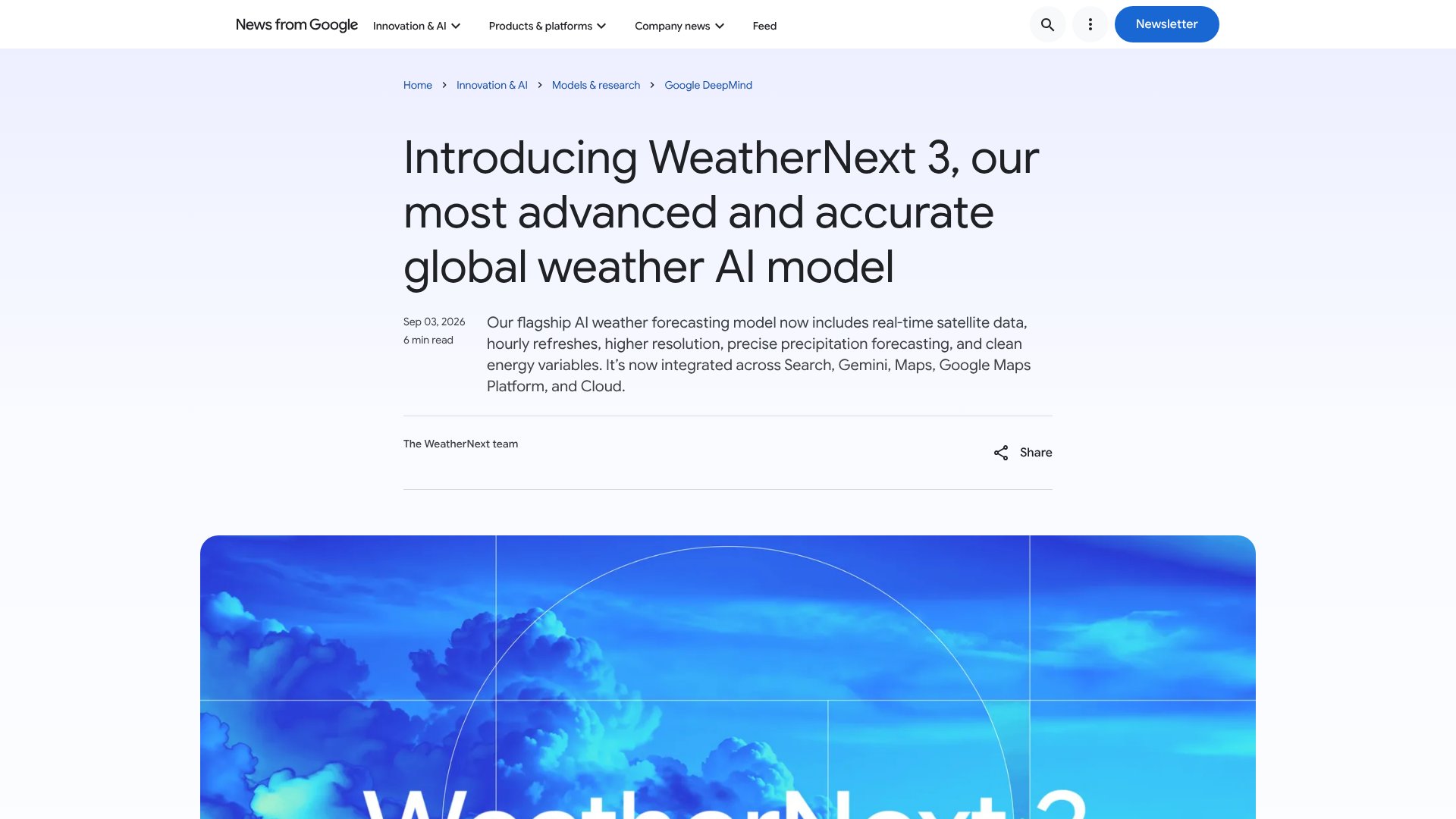
WeatherNext 3 is an AI weather forecasting model from Google DeepMind that produces hourly global forecasts at up to 5-kilometer resolution. It uses real-time satellite data to predict temperature, precipitation, wind speeds, and solar radiation with up to 50% better accuracy than previous models.
Key Features
Hourly Forecast Updates.
High-Resolution Predictions.
Improved Precipitation Accuracy.
Renewable Energy Forecasts.
Weather Station Training.
Wide Integration Access.
Frequently Asked Questions
WeatherNext 3 is an AI weather forecasting model developed by Google DeepMind and Google Research. It generates global weather forecasts every hour at up to 5-kilometer resolution using real-time satellite data. The model predicts temperature, precipitation, wind speeds, and solar radiation with improved accuracy compared to earlier versions.
WeatherNext 3 ranks as the most accurate global weather model according to independent evaluations by Brightband's Operational WeatherBench platform. It shows up to 60% improvement in precipitation forecasting scores and up to 50% more accurate rain predictions when planning a day or more ahead, with the biggest improvements in historically underserved regions.
WeatherNext 3 is available for free through Google Search, Google Maps, and Gemini. For developers and businesses, forecast data can be accessed through BigQuery, Google Earth Engine, and Google Cloud Storage, with pricing through the Google Maps Platform Weather API for commercial applications.
WeatherNext 3 is useful for renewable energy operators planning wind and solar output, researchers analyzing weather patterns, developers building weather-dependent applications, and businesses making weather-sensitive operational decisions. It's also helpful for anyone needing more frequent and localized weather forecasts than traditional models provide.